Low blood pressure, medically known as hypotension, is commonly defined as a reading below 90/60 mmHg. However, a low reading is not automatically dangerous. Some healthy people naturally have lower blood pressure and experience no symptoms or health problems.
What matters most is whether the blood pressure has fallen suddenly, is causing symptoms or is preventing enough blood from reaching the heart, brain and other vital organs.
So, can low blood pressure cause a heart attack? Low BP does not usually cause the typical heart attack caused by a blocked coronary artery. However, severe or prolonged hypotension can reduce oxygen-rich blood flow to the heart. In people with existing heart disease, heart failure or narrowed coronary arteries, this reduced circulation may contribute to heart-muscle injury or another cardiac emergency.
The relationship can also work in the opposite direction. A severe heart attack may weaken the heart’s pumping ability and cause blood pressure to drop. Therefore, sudden low BP with chest pain, breathlessness, sweating, confusion or fainting should never be ignored.
What Is Considered Low Blood Pressure?
Q: What blood pressure reading is considered low?
A reading below 90/60 mmHg is generally considered low blood pressure.
The upper number is the systolic pressure, which measures pressure when the heart contracts and pumps blood. The lower number is the diastolic pressure, which measures pressure while the heart relaxes between beats.
For example, a reading of 88/58 mmHg falls within the commonly used hypotension range. However, one reading alone does not always mean that something is wrong.
| Blood pressure situation | What it may mean |
| Below 90/60 without symptoms | May be normal for some healthy people |
| Below 90/60 with dizziness or weakness | Should be assessed if persistent or recurrent |
| Sudden fall from the person’s usual BP | May be more concerning than a naturally low baseline |
| Very low BP with chest pain, confusion or fainting | May indicate inadequate blood flow and needs urgent care |
Normal low BP versus dangerous hypotension
Some people naturally have blood pressure around 90/60 mmHg and feel completely well. This may not require treatment.
Low BP becomes more concerning when it:
- Develops suddenly
- Causes dizziness or fainting
- Produces confusion or blurred vision
- Occurs with chest pain or breathlessness
- Follows vomiting, diarrhoea, bleeding or severe infection
- Begins after a medicine change
A person whose usual reading is 100/65 mmHg and has no symptoms may simply have naturally low BP. By comparison, a sudden fall from 140/90 to 90/60 mmHg with sweating, weakness and chest discomfort may signal a serious problem.
Can Low Blood Pressure Actually Cause a Heart Attack?
Q: Can low BP directly cause a heart attack?
Usually, low blood pressure does not directly cause the typical heart attack that occurs when a blood clot blocks a coronary artery.
However, the heart needs a continuous supply of oxygen-rich blood. When blood pressure becomes severely low, the coronary arteries may receive less blood. If this reduction is severe or prolonged, the heart muscle may not receive enough oxygen.
The NHLBI notes that low blood pressure can become dangerous when the heart, brain or other organs do not receive enough blood flow, increasing the risk of heart attack or stroke.
This risk may be greater in people with:
- Narrowed coronary arteries
- Previous heart attack
- Heart failure
- Heart-valve disease
- Severe anaemia
- Major blood loss
- Severe dehydration
- Serious infection or shock
Can a heart attack cause low blood pressure?
Yes. A severe heart attack may damage enough heart muscle to reduce the heart’s pumping ability. Blood pressure may then fall because the heart cannot circulate blood effectively.
In severe cases, this can lead to cardiogenic shock, in which the heart is unable to supply enough blood to the organs. Low blood pressure, dizziness, confusion and a weak or irregular pulse are recognised warning signs.
Therefore, low BP with chest pain should not be treated only with salt, tea or home remedies. It requires urgent medical assessment.
Symptoms That Mean Your Low BP Is Dangerous
Q: Which hypotension symptoms should not be ignored?
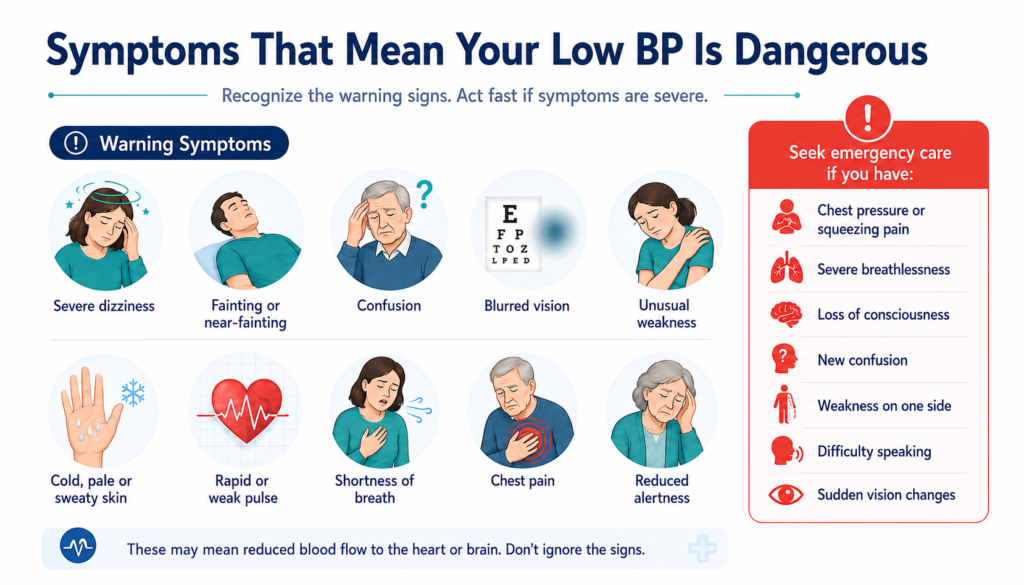
Low blood pressure may become dangerous when it causes:
- Severe dizziness
- Fainting or near-fainting
- Confusion
- Blurred vision
- Unusual weakness
- Cold, pale or sweaty skin
- Rapid or weak pulse
- Shortness of breath
- Chest pain
- Reduced alertness
The American Heart Association lists symptoms such as confusion, dizziness, nausea, fainting, fatigue, blurred vision and heart palpitations as possible signs that low blood pressure is causing a problem.
Seek emergency care immediately if low BP occurs with:
- Chest pressure or squeezing pain
- Severe breathlessness
- Loss of consciousness
- New confusion
- Weakness on one side of the body
- Difficulty speaking
- Sudden vision changes
These symptoms may indicate reduced blood flow to the heart or brain.
Conditions That Link Low BP to Heart Risk
Q: Which medical conditions can cause low blood pressure and increase heart risk?
Heart failure and other heart conditions
Heart failure, heart attacks, very slow heart rate, serious abnormal heart rhythms and heart-valve disease may reduce the heart’s ability to pump enough blood.
Low blood pressure in someone with existing heart failure may also be associated with poorer health outcomes and requires careful medical assessment.
Blood pressure and heart medicines
Some medicines may lower BP excessively, including:
- Diuretics
- Beta-blockers
- Alpha-blockers
- Certain heart medicines
- Some medicines used for high blood pressure
The risk may increase after a dose change, dehydration, illness or significant weight loss.
Do not stop prescribed medicine without consulting a doctor. The cause of hypotension should be identified before treatment is changed.
Dehydration
Vomiting, diarrhoea, fever, heavy sweating or inadequate fluid intake can reduce blood volume and cause BP to fall.
Older adults may be especially vulnerable because thirst sensation can decrease with age, and some medicines may increase fluid loss.
Autonomic dysfunction
The autonomic nervous system helps regulate heart rate and the tightening of blood vessels.
Conditions such as Parkinson’s disease, diabetes-related nerve damage and other neurological disorders can interfere with this control and cause low BP, particularly after standing.
Orthostatic hypotension
Orthostatic hypotension is a sudden drop in blood pressure after standing up from sitting or lying down.
It may cause:
- Light-headedness
- Blurred vision
- Weakness
- Fainting
The condition is more common in older adults and may also be associated with heart disease, diabetes and certain medicines.
What to Do If Your BP Drops Suddenly
Q: What should you do after a sudden low blood pressure reading?
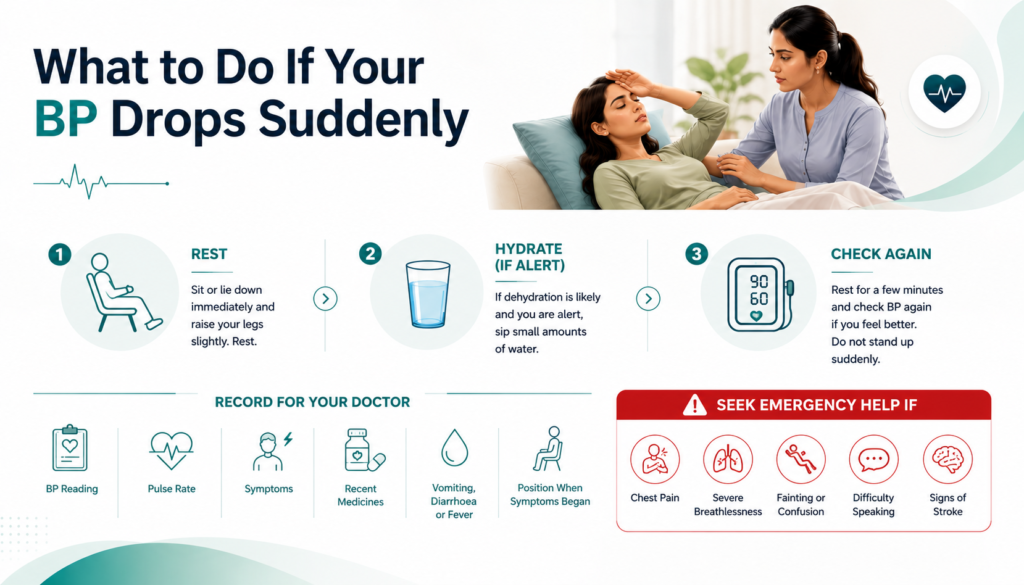
Sit or lie down immediately to reduce the risk of falling. If comfortable, raise the legs slightly and rest before measuring BP again.
If the person is fully alert and dehydration is likely, small amounts of water may be helpful. However, do not force fluids if the person:
- Is vomiting
- Is confused or unconscious
- Has severe breathlessness
- Has been advised to restrict fluids because of heart or kidney disease
Record the following information for the doctor:
| Information to record | Why it matters |
| BP reading | Shows how low the pressure became |
| Pulse rate | May reveal a fast, slow or irregular heartbeat |
| Symptoms | Helps assess urgency |
| Recent medicines | Identifies possible medicine-related hypotension |
| Vomiting, diarrhoea or fever | May suggest dehydration or illness |
| Position when symptoms began | Helps identify orthostatic hypotension |
Do not increase salt, stop heart medicine or take stimulants without medical advice. Low BP caused by dehydration, heart disease, infection, bleeding or medicine effects requires different treatment.
Seek emergency medical help if the person has chest pain, severe breathlessness, fainting, confusion, difficulty speaking or signs of stroke.
When to See a Cardiologist CMCH Chomu
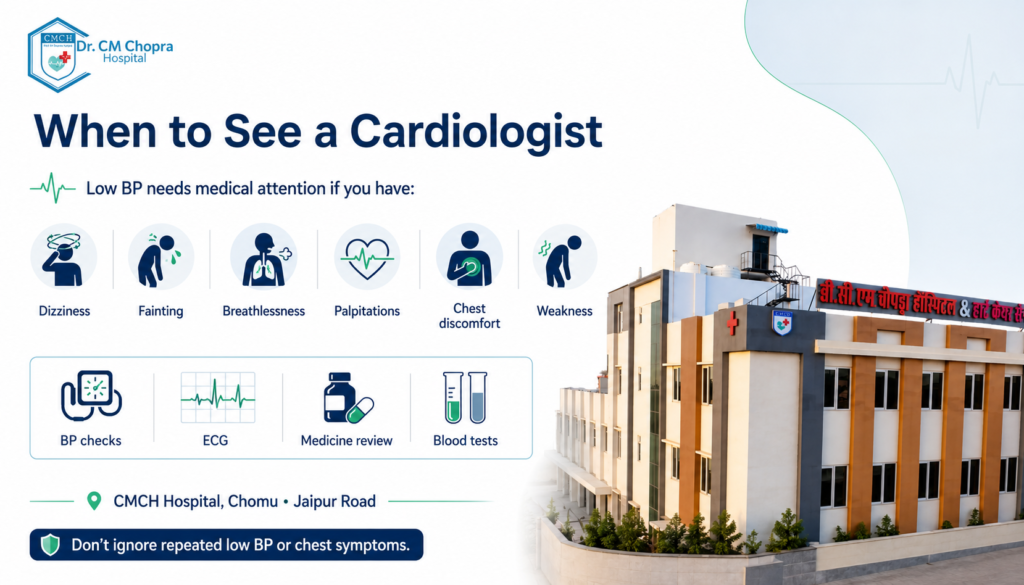
Repeated low blood pressure should be medically assessed when it causes:
- Dizziness
- Fainting
- Breathlessness
- Palpitations
- Chest discomfort
- Weakness
- Recurrent falls
Patients from Chomu, Jaipur Road and nearby areas can consult the General Medicine and Cardiology team at CMCH Hospital for low blood pressure assessment and associated heart symptoms.
CMCH Hospital is located on Jaipur Road in Chomu and provides cardiac and general-medicine services through its team of physicians and cardiology specialists.
Depending on the patient’s symptoms and medical history, the doctor may recommend:
- Repeated blood-pressure measurements
- Sitting and standing BP checks
- Medicine review
- Blood tests
- ECG
- Heart-rhythm assessment
- Further cardiac evaluation when required
An ECG may be recommended when low BP occurs with chest pain, palpitations, fainting or suspected heart disease.
Do not wait for repeated fainting or severe chest symptoms. A sudden fall in blood pressure may be caused by dehydration, medicines, bleeding, infection or a heart condition requiring timely treatment.
Related Resources
- Blood Pressure Normal Range by Age: Complete Chart for Children, Adults and Seniors – Understand healthy systolic and diastolic readings for different age groups and learn how to measure blood pressure correctly.
- High Blood Pressure Symptoms & Hypertension: The Complete Guide – Learn about hypertension symptoms, causes, BP stages, risk factors, treatment options and when high blood pressure requires urgent care.
- Sugar Level Normal Range: Complete Chart by Age, Gender & Health Condition – Understand fasting, post-meal, and random blood sugar values with a detailed reference chart.
- Type 2 Diabetes Treatment in India: Medications, Lifestyle Changes & When to See a Doctor – Learn about diabetes medications, insulin therapy, exercise, and long-term blood sugar management.
- Diabetic Diet Plan for Indians: A 7-Day Meal Plan with Regional Foods – Discover a practical Indian meal plan, portion control tips, and diabetic-friendly foods for healthier glucose management.
- Heart Check-Up Cost in Jaipur & Chomu: Packages, What’s Included & Why It Matters – Regular heart screenings are especially important for people living with diabetes, as they have a higher risk of cardiovascular disease.
- ECG Test in Chomu & Jaipur: Cost, Preparation & What to Expect – Learn when an ECG is recommended and how it helps detect heart
Frequently Asked Questions
Is 90/60 blood pressure always dangerous?
No. Some healthy people naturally have readings near or below 90/60 mmHg without symptoms. It becomes more concerning when the reading is new, suddenly falling or accompanied by dizziness, weakness, confusion or fainting.
Can low diastolic blood pressure affect the heart?
Very low diastolic pressure may reduce the pressure available to supply blood to the coronary arteries, particularly in older adults or people with existing coronary artery disease. The reading should be interpreted together with symptoms and medical history.
Can dehydration cause low BP and chest discomfort?
Dehydration can reduce blood volume, lower blood pressure and increase heart rate. However, chest discomfort should not automatically be blamed on dehydration. Severe or persistent chest pain requires urgent medical assessment.
Can blood pressure medicines cause hypotension?
Yes. Some medicines used for hypertension or heart disease can lower blood pressure too much. A doctor may need to review the medicine or dosage, but patients should not make changes themselves.
Is low BP a sign of a heart attack?
Not always. However, a severe heart attack may cause low BP if the heart becomes unable to pump effectively. Low BP with chest pain, sweating, breathlessness, confusion or fainting is an emergency.
Conclusion
Low blood pressure does not usually cause a heart attack on its own. However, severe or prolonged hypotension can reduce blood flow to the heart and other vital organs.
This can contribute to heart-muscle injury, especially in people with existing heart disease, major blood loss, severe dehydration, infection or shock.
The opposite relationship is also important: a heart attack or heart failure can cause blood pressure to fall.
Seek urgent medical care when low BP occurs with chest pain, fainting, severe breathlessness, confusion, weakness, difficulty speaking or sudden vision changes.
Medical Disclaimer
This article is intended for general health education only. It does not replace professional medical diagnosis or treatment. Low blood pressure should be interpreted according to symptoms, medical history, medicines and the person’s usual readings.

0 Comments