Heart attack and cardiac arrest are often used as if they mean the same thing. They don’t. A simple way to remember the difference between heart attack and cardiac arrest: a heart attack is a plumbing problem, and cardiac arrest is an electrical problem.
Both are medical emergencies. Both require immediate action. But what happens inside the body, how each is treated, and the chances of survival are very different.
This distinction matters in India as much as anywhere else — public awareness of heart attack and cardiac arrest differences remains low, and knowing what to do in the first few minutes can be the difference between life and death, especially outside major city centers.
Patients from Chomu, Jaipur Road, Govindgarh, Reengus and nearby areas can reach the emergency and cardiology team at CMCH Hospital, Chomu for cardiac emergencies and evaluation.
What Is a Heart Attack?
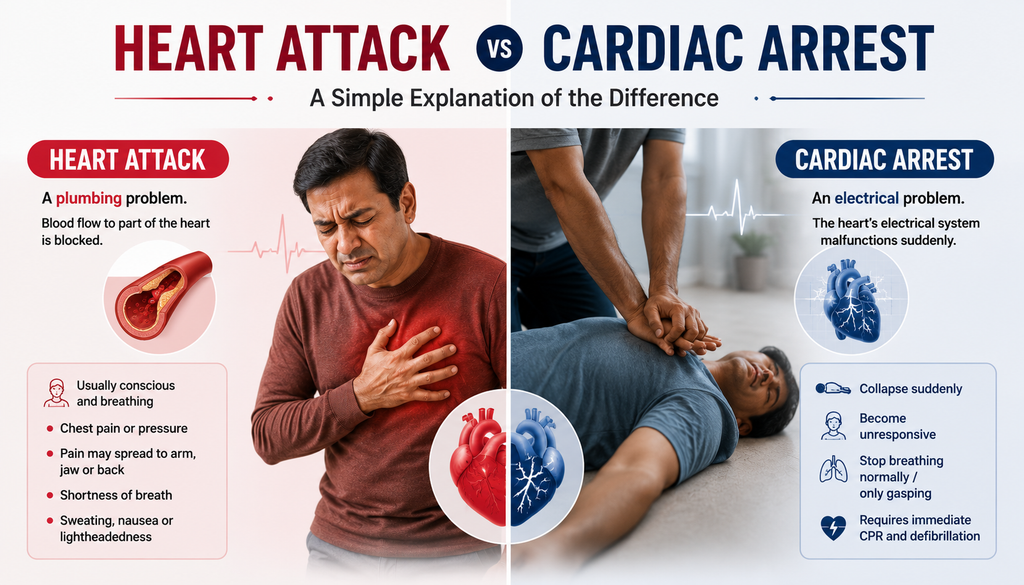
Heart attack definition: a heart attack (medically called a myocardial infarction) happens when blood flow to part of the heart muscle is blocked — usually by a clot forming where a fatty deposit (plaque) has built up in a coronary artery.
Think of it as a blocked pipe. The heart keeps beating, but the blood supply to one area is cut off. Without oxygen, that part of the heart muscle begins to get damaged, and the longer the blockage lasts, the more damage occurs.
During a heart attack, a person is usually conscious and breathing. Common symptoms include:
- Chest pain or pressure
- Pain spreading to the arm, jaw or back
- Shortness of breath
- Sweating, nausea or lightheadedness
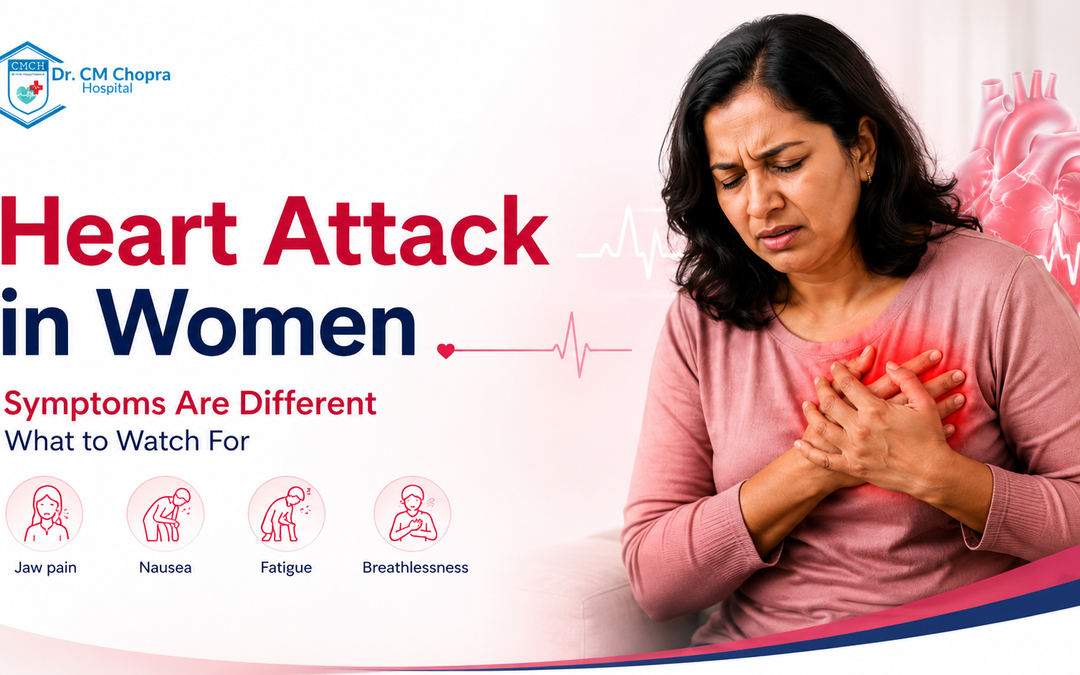
Symptoms can be more subtle in women — heart attack symptoms in women often include jaw pain, back pain, nausea and unusual fatigue alongside chest discomfort. See the full guide on Heart Attack Symptoms in Women (link once published).
What Is Cardiac Arrest?
What is cardiac arrest? Cardiac arrest happens when the heart’s electrical system malfunctions, causing a dangerously abnormal heart rhythm. The heart stops pumping blood effectively — or stops beating altogether.
Think of it as an electrical short circuit. The wiring that controls the heartbeat fails, so the heart can no longer pump blood to the brain and the rest of the body.
Cardiac arrest symptoms appear suddenly, often without warning. A person will:
- Collapse suddenly
- Become unresponsive
- Stop breathing normally, or only gasp
Without immediate CPR and defibrillation, cardiac arrest is fatal within minutes.
The Key Differences — At a Glance
| Feature | Heart Attack | Cardiac Arrest |
| What fails | Blood flow (a blocked artery) | Electrical signal (abnormal rhythm) |
| Heart activity | Still beating, but impaired | Stops beating effectively |
| Consciousness | Usually conscious | Loses consciousness immediately |
| Onset | Can build up over minutes to hours | Sudden, without warning |
| Immediate danger | Heart muscle damage | Death within minutes without treatment |
| First response | Call ambulance | Call ambulance, start CPR immediately |
Can a Heart Attack Lead to Cardiac Arrest?
Yes. A heart attack can trigger cardiac arrest by causing a dangerous abnormal heart rhythm.
Damage to the heart muscle during a heart attack can disrupt the heart’s electrical signals, triggering a rhythm such as ventricular fibrillation. When that happens, a heart attack can suddenly turn into cardiac arrest.
This is one reason heart attack symptoms should never be ignored, even if they seem mild. Getting to a hospital quickly reduces both heart damage and the risk of this rhythm disturbance occurring.
Cardiac arrest can also happen without a heart attack — for example, due to underlying heart disease, an inherited rhythm disorder, or other causes unrelated to a blocked artery.
First Aid — What to Do for Each
If you suspect a heart attack:
- Call for emergency medical help immediately.
- Help the person sit down and stay calm.
- Loosen tight clothing.
- Do not let them drive themselves to the hospital.
- Aspirin may be recommended by the emergency operator or a clinician if appropriate — do not decide this yourself during an emergency.
Cardiac arrest treatment starts with immediate action if you suspect cardiac arrest:
- Call for emergency medical help immediately.
- Begin CPR — push hard and fast in the center of the chest, about 100–120 compressions per minute.
- If an AED (automated external defibrillator) is available, use it as soon as possible.
- Continue CPR until emergency responders arrive or the person shows signs of life.
Cardiac arrest requires CPR right away. Immediate bystander CPR can double or triple a person’s chance of survival while waiting for emergency help to arrive.
Survival Rates and Recovery
Survival outcomes for the two conditions are very different.
Most people who have a heart attack survive, especially with prompt hospital treatment. Exact survival depends on factors such as the type and severity of the heart attack, age, other health conditions, and how quickly treatment is received. Recovery often involves medication, lifestyle changes, cardiac rehabilitation, and monitoring for future risk.
Out-of-hospital cardiac arrest has a low survival rate worldwide, especially when CPR and defibrillation are delayed. Immediate bystander CPR can double or triple a person’s chance of survival.
Recovery after cardiac arrest depends heavily on how quickly CPR and defibrillation were given, and can include a period of intensive care, neurological assessment, and long-term cardiac monitoring.
Emergency Cardiac Care at CMCH Chomu
Recognizing the difference between a heart attack and cardiac arrest — and knowing what to do in the first few minutes — can save a life.
CMCH Hospital, Chomu supports patients across Chomu, Jaipur Road, Govindgarh, Reengus and nearby areas with:
- Emergency evaluation for cardiac symptoms
- Cardiology consultations and diagnostic testing
- ECG and cardiac risk evaluation
- Preventive heart screening
If you or someone near you shows signs of a heart attack or cardiac arrest, call for emergency help immediately — do not wait to see if symptoms pass.
For more on recognizing warning signs early, see Heart Attack Symptoms: The Complete Guide and Heart Attack Symptoms in Women (link once published).
Frequently Asked Questions
Are heart attack and cardiac arrest the same?
No. A heart attack is a blood-flow (circulation) problem, while cardiac arrest is an electrical problem that causes the heart to stop beating effectively. They are related but different conditions.
Can a heart attack cause cardiac arrest?
Yes. A heart attack can trigger cardiac arrest by causing a dangerous abnormal heart rhythm.
What is the first thing to do for cardiac arrest?
Call for emergency medical help immediately and begin CPR right away. Use an AED if one is available.
Which is more dangerous, heart attack or cardiac arrest?
Cardiac arrest is more immediately life-threatening, since the heart stops pumping blood and death can occur within minutes without CPR. A heart attack is serious but usually allows more time to reach treatment.
Do heart attack and cardiac arrest have the same symptoms?
No. A heart attack usually causes chest pain, breathlessness and related symptoms while the person stays conscious. Cardiac arrest causes sudden collapse, unresponsiveness and no normal breathing.
Medical Disclaimer
This article is intended for general health education only and does not replace professional medical consultation, diagnosis or treatment. If you suspect a heart attack or cardiac arrest, seek emergency medical care immediately.

0 Comments