High blood pressure, medically known as hypertension, is a condition in which the pressure of blood against the walls of the arteries remains persistently elevated.
It is one of the most important preventable risk factors for heart attack, stroke, heart failure, kidney disease and vision problems. However, most people with hypertension do not experience noticeable symptoms. The only reliable way to detect it is through proper blood pressure measurement.
This absence of warning signs is why hypertension is commonly called the silent killer. A person may feel healthy while high blood pressure gradually damages blood vessels and vital organs.
Regular blood pressure checks are particularly important for people who are older, overweight, physically inactive, living with diabetes or kidney disease, consuming excess salt, using tobacco or having a family history of hypertension.
People living in Chomu, Jaipur Road and nearby areas can consult the General Medicine or Cardiology team at CMCH Hospital, Chomu, for blood pressure assessment, hypertension treatment and related diagnostic tests.
What Is Hypertension and Why Is It Called the Silent Killer?
Blood pressure is the force produced when blood pushes against the walls of the arteries as the heart circulates it through the body.
Hypertension occurs when this pressure remains higher than the recommended range over time.
The World Health Organization defines clinical hypertension in adults as:
- Systolic blood pressure of 140 mmHg or higher
- Diastolic blood pressure of 90 mmHg or higher
- Or both
The diagnosis is generally confirmed through elevated measurements taken on two different days rather than from a single reading.
Hypertension is called the silent killer because many affected people feel completely normal. They may not experience headaches, dizziness or any other obvious blood pressure symptoms.
Without treatment, the continuing pressure can damage the arteries and increase the risk of:
| Possible complication | How hypertension contributes |
| Heart attack | Damages arteries and reduces blood supply to the heart |
| Stroke | Increases the risk of blocked or ruptured blood vessels in the brain |
| Heart failure | Forces the heart to work harder over time |
| Kidney disease | Damages the small blood vessels that filter waste |
| Vision loss | Affects the blood vessels supplying the retina |
| Vascular disease | Contributes to narrowing and hardening of arteries |
| Cognitive problems | May affect blood flow and small vessels in the brain |
Hypertension affects about one in three adults globally and remains a major cause of preventable cardiovascular complications.
High Blood Pressure Symptoms And When There Are None
Most people with hypertension experience no symptoms at all.
This is the most important point to understand. A person cannot determine whether their blood pressure is normal simply by how they feel.
Headache, dizziness, nosebleeds and anxiety are often described as signs of high blood pressure. However, these symptoms can occur for many reasons and are not reliable for diagnosing routine hypertension.
Symptoms are more likely when blood pressure becomes extremely high or begins affecting the heart, brain, eyes or other organs.
Possible symptoms of severely elevated blood pressure
Possible warning signs include:
- Severe or unusual headache
- Blurred or altered vision
- Chest pain or pressure
- Shortness of breath
- Weakness or numbness
- Difficulty speaking
- Confusion
- Nausea or vomiting
- Severe anxiety
- A nosebleed that is difficult to control
These symptoms do not always mean that blood pressure is high. Similarly, a person may have dangerously elevated blood pressure without experiencing every symptom.
High blood pressure symptoms at a glance
| Symptom | Is it a reliable sign of routine hypertension? | When to seek urgent care |
| Headache | No | If sudden or severe, especially with weakness, confusion or vision changes |
| Dizziness | No | If accompanied by difficulty speaking, fainting or weakness |
| Nosebleed | Usually no | If severe, persistent or associated with an extremely high reading |
| Blurred vision | Not usually an early sign | If sudden or severe |
| Chest pain | Never ignore | Seek emergency care, especially with sweating or breathlessness |
| Breathlessness | Not specific to hypertension | Seek urgent care if severe or sudden |
| No symptoms | Very common | Continue regular BP monitoring |
Can high blood pressure cause headaches?
Mild or moderately elevated blood pressure usually does not cause headaches.
However, a severe headache may occur when blood pressure rises dangerously high, particularly when the brain or another organ is affected.
Seek emergency medical care if a severe headache is accompanied by:
- Facial drooping
- Weakness on one side
- Difficulty speaking
- Confusion
- Loss of balance
- Chest pain
- Shortness of breath
- Sudden vision changes
Can hypertension cause dizziness?
Dizziness is not a dependable hypertension symptom. It may occur because of:
- Dehydration
- Low blood sugar
- Anaemia
- Inner-ear problems
- Medication effects
- Low blood pressure
- Anxiety
Sudden dizziness with weakness, speech difficulty, chest pain or loss of balance requires urgent medical evaluation.
Can hypertension cause nosebleeds?
Most nosebleeds are caused by dryness, nasal irritation, infection or injury.
A nosebleed alone does not prove that a person has hypertension. However, a severe or persistent nosebleed with a very high blood pressure reading should be medically assessed.
Vision changes and hypertension
Long-term uncontrolled blood pressure may damage the small vessels supplying the retina. This is known as hypertensive retinopathy.
Possible signs include:
- Blurred vision
- Double vision
- Reduced vision
- Sudden visual disturbance
A sudden change or loss of vision requires immediate medical attention.
Chest pain and high blood pressure
Chest pain can indicate a serious heart-related problem and should not automatically be attributed to gas, acidity or anxiety.
Seek emergency care when chest discomfort:
- Feels heavy, tight, squeezing or pressure-like
- Spreads to the arm, back, shoulder, neck or jaw
- Occurs with sweating, nausea or breathlessness
- Persists for several minutes
- Keeps returning
For more information, read CMCH’s guides on Chest Pain: Gas vs Heart Attack and Heart Attack Symptoms: The Complete Guide.
Understanding Your Blood Pressure Reading
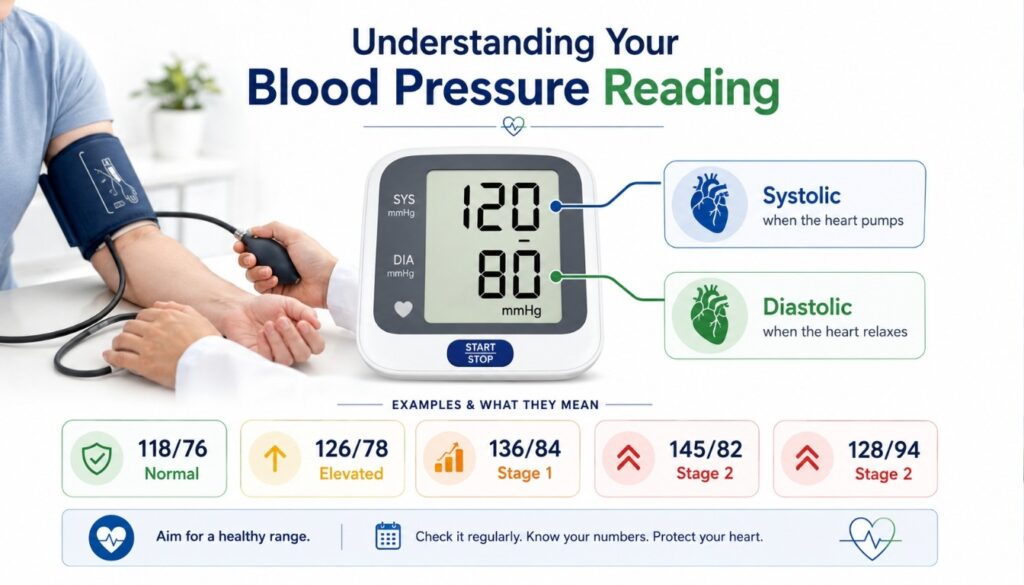
Blood pressure is recorded as two numbers and measured in millimetres of mercury, written as mmHg.
For example:
120/80 mmHg
The upper number is the systolic pressure. The lower number is the diastolic pressure.
What is systolic blood pressure?
Systolic pressure measures the force inside the arteries when the heart contracts and pumps blood.
In a reading of 120/80 mmHg:
- 120 is the systolic pressure.
What is diastolic blood pressure?
Diastolic pressure measures the force inside the arteries while the heart relaxes between beats.
In a reading of 120/80 mmHg:
- 80 is the diastolic pressure.
Both values matter. A person may have:
- High systolic pressure with normal diastolic pressure
- High diastolic pressure with normal systolic pressure
- Both readings above the recommended range
The higher category is usually considered when either number is elevated.
For example:
| Blood pressure reading | Interpretation |
| 118/76 mmHg | Normal |
| 126/78 mmHg | Elevated systolic pressure |
| 136/84 mmHg | Stage 1 under AHA/ACC categories |
| 145/82 mmHg | Stage 2 based on systolic pressure |
| 128/94 mmHg | Stage 2 based on diastolic pressure |
How to measure blood pressure correctly
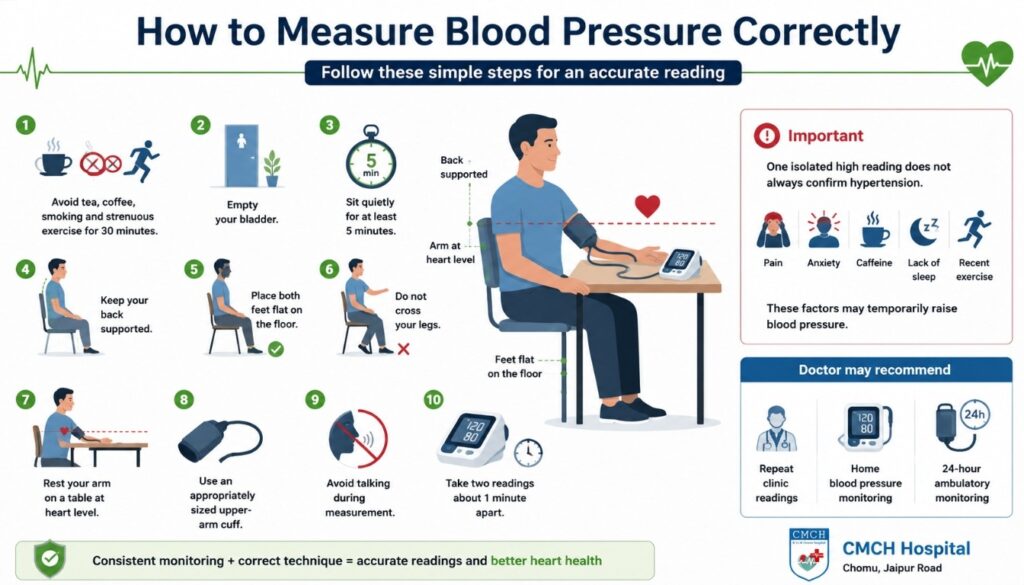
Incorrect posture, cuff size or preparation can affect a reading.
For a more reliable result:
- Avoid tea, coffee, smoking and strenuous exercise for about 30 minutes beforehand.
- Empty your bladder.
- Sit quietly for at least five minutes.
- Keep your back supported.
- Place both feet flat on the floor.
- Do not cross your legs.
- Rest the arm on a table at heart level.
- Use an appropriately sized upper-arm cuff.
- Avoid talking during measurement.
- Take two readings about one minute apart.
One isolated high reading does not always confirm hypertension. Pain, anxiety, caffeine, lack of sleep and recent exercise may temporarily raise blood pressure.
A doctor may recommend repeat clinic readings, home monitoring or 24-hour ambulatory blood pressure monitoring.
Stages of High Blood Pressure
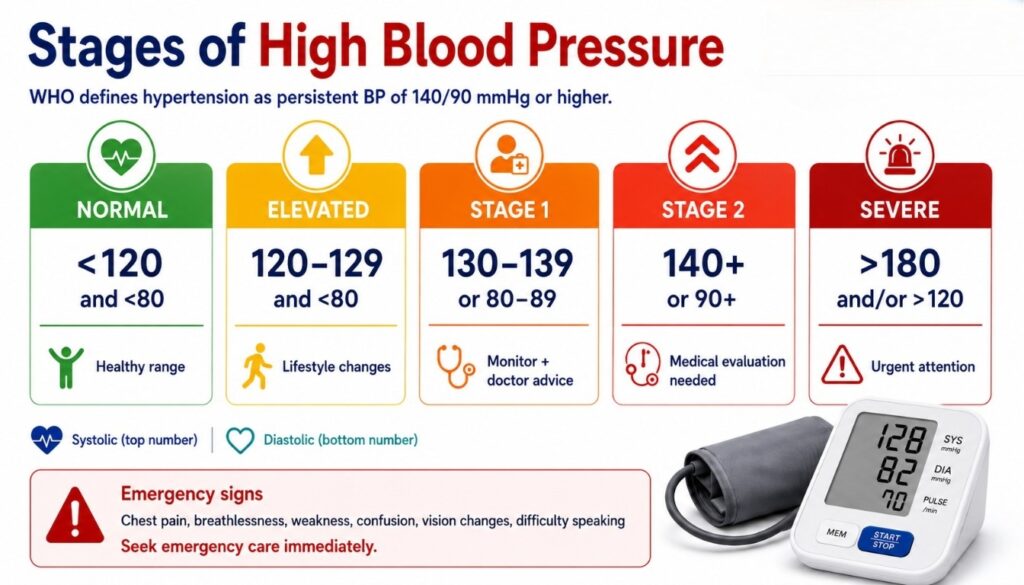
Blood pressure guidelines do not all use identical categories.
WHO defines hypertension as persistent readings of 140/90 mmHg or higher. The table below uses the widely recognised AHA/ACC categories, which identify earlier levels of blood pressure elevation.
| Blood pressure category | Systolic pressure | Diastolic pressure |
| Normal | Less than 120 | And less than 80 |
| Elevated | 120–129 | And less than 80 |
| Stage 1 hypertension | 130–139 | Or 80–89 |
| Stage 2 hypertension | 140 or higher | Or 90 or higher |
| Severe hypertension | Higher than 180 | And/or higher than 120 |
Normal blood pressure
Blood pressure below 120/80 mmHg is generally considered normal.
Healthy eating, regular physical activity, adequate sleep, weight management and avoiding tobacco can help maintain normal readings.
Elevated blood pressure
Elevated blood pressure refers to a systolic reading between 120 and 129 while the diastolic reading remains below 80.
Medicine may not always be necessary, but lifestyle changes and periodic monitoring are important.
Stage 1 hypertension
Stage 1 includes a systolic reading from 130 to 139 or a diastolic reading from 80 to 89.
Treatment depends on:
- Repeated BP readings
- Age
- Diabetes or kidney disease
- Existing heart disease
- Previous stroke
- Overall cardiovascular risk
Some people may initially be advised to follow lifestyle measures, while others may also need medication.
Stage 2 hypertension
Stage 2 includes systolic pressure of 140 or higher or diastolic pressure of 90 or higher.
Patients in this range usually need medical evaluation. Many require prescribed medicine in addition to lifestyle changes.
Severe hypertension and hypertensive emergency
A reading above 180/120 mmHg is severely elevated.
Wait at least one minute and check the blood pressure again.
If the second reading remains above this level but there are no concerning symptoms, contact a healthcare professional immediately for advice.
Seek emergency care without delay if the reading is accompanied by:
- Chest pain
- Shortness of breath
- Back pain
- Weakness
- Numbness
- Vision changes
- Difficulty speaking
- Confusion
- Loss of consciousness
These symptoms may indicate a hypertensive emergency involving acute organ damage.
Do not take extra tablets or attempt to lower the blood pressure rapidly unless instructed by a qualified medical professional.
What Causes High Blood Pressure?
Hypertension is generally divided into two types: primary hypertension and secondary hypertension.
Primary hypertension
Primary, or essential, hypertension develops gradually and has no single identifiable cause.
It may result from a combination of:
- Increasing age
- Genetics
- Excess salt intake
- Overweight or obesity
- Physical inactivity
- Tobacco use
- Excess alcohol
- Poor sleep
- Long-term unhealthy dietary habits
- Metabolic conditions
Most adults with hypertension have primary hypertension.
Secondary hypertension
Secondary hypertension develops because of another condition or medication.
Possible causes include:
- Kidney disease
- Thyroid disorders
- Adrenal gland disorders
- Obstructive sleep apnoea
- Narrowing of kidney arteries
- Pregnancy-related hypertension
- Certain congenital conditions
Some medicines may also raise blood pressure or make it more difficult to control. These can include certain decongestants, hormonal medicines, antidepressants and non-steroidal anti-inflammatory drugs.
Patients should tell their doctor about all prescription medicines, over-the-counter medicines and supplements they use.
Hypertension Risk Factors Common in Rajasthan
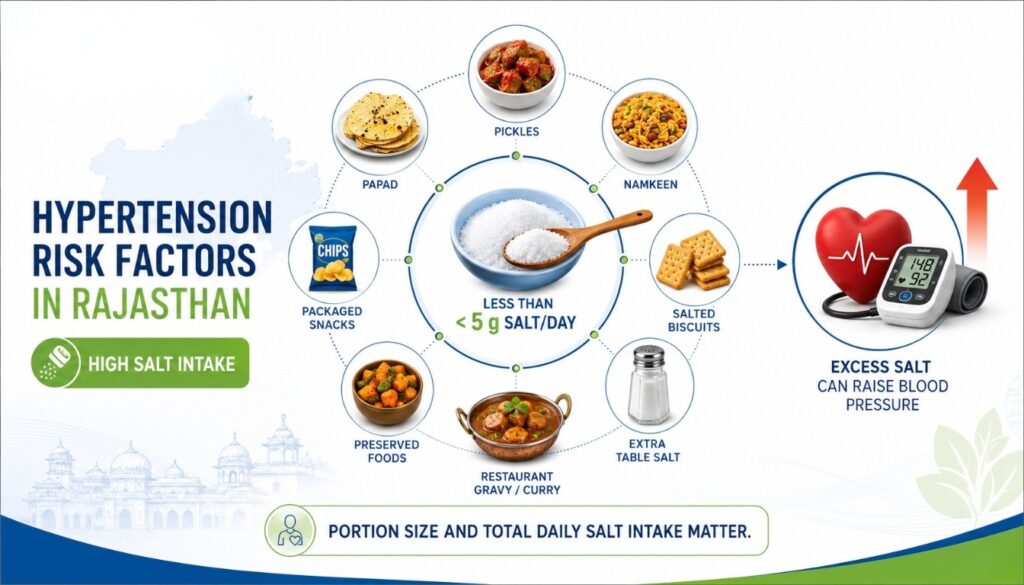
Hypertension can affect anyone, but several lifestyle and healthcare factors may increase the risk.
High salt intake
Sodium can contribute to fluid retention and higher blood pressure, particularly in people who are salt-sensitive.
In some Rajasthan households, total salt consumption may increase through frequent intake of:
- Pickles
- Papad
- Namkeen
- Salted biscuits
- Packaged snacks
- Preserved foods
- Restaurant gravies
- Extra table salt
Traditional foods do not necessarily need to be eliminated, but portion size and total daily sodium intake matter.
WHO recommends consuming less than 5 grams of salt per day, which is approximately one teaspoon from all sources combined.
Age
The risk of hypertension rises with age as arteries gradually become stiffer.
However, high blood pressure is also increasingly seen in younger adults with obesity, inactivity, poor sleep and unhealthy diets.
Family history
People with a parent, sibling or close relative who has hypertension are at greater risk.
Family history cannot be changed, but regular screening and early lifestyle intervention may reduce complications.
Obesity and abdominal fat
Excess body weight makes the heart work harder and is associated with:
- Diabetes
- Sleep apnoea
- Abnormal cholesterol
- Insulin resistance
- Cardiovascular disease
Gradual and sustainable weight loss may help reduce blood pressure in people who are overweight.
Physical inactivity
Long periods of sitting and limited exercise can contribute to weight gain and poorer cardiovascular health.
Regular walking, yoga, cycling or another suitable activity can support blood pressure control.
Stress and poor sleep
Persistent stress and inadequate sleep can make hypertension more difficult to manage.
They may also contribute to:
- Unhealthy eating
- Tobacco use
- Missed medicines
- Reduced physical activity
- Higher caffeine intake
Tobacco and alcohol
Smoking and chewing tobacco damage blood vessels and increase cardiovascular risk.
Excess alcohol consumption may also raise blood pressure and interfere with treatment.
Diabetes and kidney disease
Hypertension, diabetes and kidney disease frequently occur together. Each can worsen the others and increase the risk of heart attack and stroke.
Patients with diabetes should regularly monitor:
- Blood pressure
- Blood sugar
- Kidney function
- Cholesterol
Relevant CMCH resources include Sugar Level Normal Range and What Is a Healthy Blood Sugar Range?
Rural and semi-rural healthcare access
Some people living in rural or semi-rural areas around Chomu may delay screening because of:
- Distance from a healthcare facility
- Transport difficulties
- Limited specialist availability
- Lack of symptoms
- Irregular follow-up
WHO India identifies low awareness, gaps in access to appropriate care and poor follow-up as major challenges in controlling hypertension.
Hypertension Treatment: Medicines and Lifestyle Changes
Treatment depends on the individual rather than one reading alone.
A doctor may consider:
- Blood pressure level
- Age
- Diabetes status
- Kidney function
- Heart disease risk
- Pregnancy
- Previous heart attack or stroke
- Other medicines
- Possible secondary causes
Treatment usually combines lifestyle changes with medication when clinically necessary.
Medicines used for hypertension
Common groups include:
| Medicine group | General role |
| ACE inhibitors | Help relax blood vessels |
| Angiotensin receptor blockers | Reduce the effects of hormones that narrow blood vessels |
| Calcium channel blockers | Help relax blood vessels and may affect heart rate |
| Thiazide or thiazide-like diuretics | Help the body remove excess sodium and fluid |
| Beta-blockers | Reduce heart rate and cardiac workload in selected patients |
| Other medicines | May be used for resistant or complicated hypertension |
The appropriate medicine depends on the patient’s overall health. Many people require two or more medicines to control their blood pressure effectively.
Never begin, stop or change blood pressure medicine without medical advice.
A normal reading while taking medicine usually means the treatment is working. It does not necessarily mean that the hypertension has permanently disappeared.
Reduce salt intake
Limit:
- Extra table salt
- Pickles
- Papad
- Namkeen
- Salted biscuits
- Instant foods
- Packaged snacks
- Processed foods
Use lemon, herbs, garlic and spices to improve flavour without adding excess salt.
Follow a balanced diet
A heart-healthy eating pattern may include:
- Seasonal vegetables
- Whole fruits
- Pulses and legumes
- Whole grains
- Unsalted nuts and seeds
- Low-fat dairy where appropriate
- Adequate protein
- Moderate amounts of healthy oils
People with kidney disease should speak to a doctor before making major changes to potassium intake.
Exercise regularly
Regular movement can support blood pressure control and weight management.
Suitable activities may include:
- Brisk walking
- Cycling
- Swimming
- Yoga
- Light strength exercises
People with very high blood pressure, chest pain, serious heart disease or severe breathlessness should obtain medical advice before starting strenuous exercise.
Maintain a healthy weight
Even moderate weight loss may improve blood pressure in overweight individuals.
Avoid crash diets, extreme fasting and unregulated weight-loss products.
Stop tobacco use
Quitting smoking and chewing tobacco is one of the most important steps for protecting the heart and blood vessels.
Improve sleep and manage stress
Useful measures include:
- Following regular sleep timings
- Practising breathing exercises
- Meditation or yoga
- Reducing late-night screen use
- Taking breaks during prolonged work
- Seeking help for persistent anxiety or sleep problems
Heart-healthy eating, physical activity, weight reduction, quitting smoking, stress management and good-quality sleep are all recognised parts of high blood pressure management.
Monitoring Blood Pressure at Home
Home blood pressure monitoring can help patients and doctors understand whether treatment is working.
Use a validated upper-arm monitor and record:
| What to record | Example |
| Date | 14 July 2026 |
| Time | 8:00 AM |
| Systolic pressure | 138 mmHg |
| Diastolic pressure | 86 mmHg |
| Pulse | 76 beats per minute |
| Medicine taken | Yes |
| Symptoms | None |
Measure at a similar time each day when advised and take two readings approximately one minute apart.
Do not change medication based on one home reading. Share the record with your doctor.
Monitor Your Blood Pressure at CMCH Hospital, Chomu
Patients from Chomu, Jaipur Road and nearby Rajasthan communities can consult the General Medicine and Cardiology team at CMCH Hospital for blood pressure assessment and hypertension management.
Depending on symptoms and medical history, evaluation may include:
- Correct blood pressure measurement
- Repeat BP readings
- Medical and family history
- Cardiovascular risk assessment
- Weight assessment
- Blood sugar testing
- Kidney function tests
- Cholesterol tests
- ECG when clinically required
- Medicine review
- Lifestyle counselling
- Follow-up monitoring
Patients with chest discomfort, palpitations, breathlessness or other heart-related symptoms may require additional assessment.
Related CMCH guides include:
- ECG Test in Chomu & Jaipur: Cost, Preparation & What to Expect
- Heart Check-Up Cost in Jaipur & Chomu
- Heart Attack Symptoms: The Complete Guide
- Chest Pain: Gas vs Heart Attack
When should you consult a doctor?
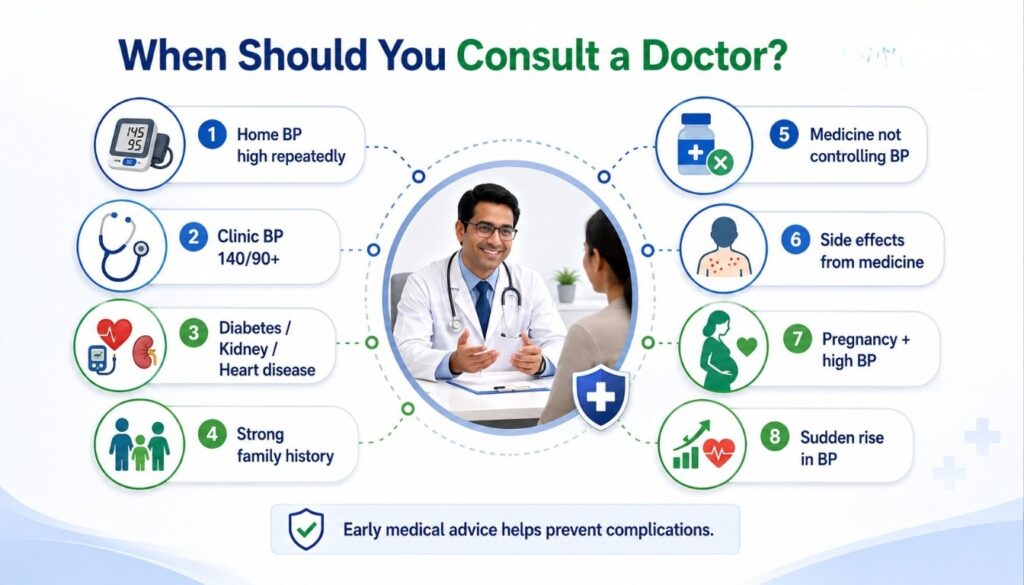
Book a medical consultation if:
- Home readings remain repeatedly elevated
- Your clinic blood pressure is repeatedly 140/90 mmHg or higher
- You have diabetes, kidney disease or heart disease
- You have a strong family history of hypertension
- Your existing medicine is not controlling your readings
- You experience medication side effects
- You are pregnant and record an elevated reading
- Your blood pressure rises unexpectedly
When should you seek emergency care?
Seek emergency medical help immediately when a reading above 180/120 mmHg occurs with:
- Chest pain
- Severe breathlessness
- Weakness or numbness
- Difficulty speaking
- Confusion
- Sudden vision changes
- Severe headache
- Loss of consciousness
Frequently Asked Questions
What are the first symptoms of high blood pressure?
Most people experience no early symptoms. Severe hypertension may sometimes cause headache, vision changes, chest pain or breathlessness, but these symptoms are not reliable for diagnosis.
Can blood pressure be high without symptoms?
Yes. Hypertension commonly remains symptom-free for years. Regular measurement is the only reliable way to detect it.
Is 140/90 considered high blood pressure?
Persistent blood pressure of 140/90 mmHg or higher meets the WHO definition of hypertension. A diagnosis generally requires repeated measurements and medical assessment.
Is 130/80 normal?
Under AHA/ACC categories, 130/80 mmHg falls within Stage 1 hypertension. Its significance depends on repeat readings and the patient’s overall cardiovascular risk.
Can stress cause hypertension?
Stress can temporarily raise blood pressure and may contribute to unhealthy habits. Long-term hypertension usually develops from several interacting causes rather than stress alone.
Does high blood pressure cause headaches?
Routine hypertension usually does not cause headache. A sudden severe headache with very high blood pressure or neurological symptoms requires urgent assessment.
Can hypertension be cured permanently?
Some secondary forms may improve after the underlying cause is treated. Primary hypertension is generally a long-term condition that can be controlled with lifestyle changes, medication and follow-up.
Can I stop taking medicine once my BP becomes normal?
No. Do not stop medication without consulting your doctor. A normal reading may mean that the medicine is controlling your blood pressure effectively.
How often should blood pressure be checked?
The frequency depends on age, previous readings and other medical conditions. People with diagnosed hypertension may need regular home monitoring and follow-up.
Which doctor treats hypertension?
A general physician can diagnose and manage most cases. A cardiologist, nephrologist or another specialist may become involved when hypertension is difficult to control or associated with complications.
Take Control of Your Blood Pressure
Hypertension may not produce noticeable warning signs, but it can gradually damage the heart, brain, kidneys, eyes and blood vessels.
Regular screening, reduced salt intake, physical activity, healthy weight management, prescribed medication and consistent medical follow-up can significantly reduce the risk of complications.
For blood pressure assessment and hypertension consultation, visit CMCH Hospital, Chomu, serving patients from Chomu, Jaipur Road and nearby areas.
For chest pain, severe breathlessness, weakness, confusion, speech difficulty or sudden vision changes—especially with a blood pressure reading above 180/120 mmHg—seek emergency medical care immediately.
Medical Disclaimer
This article is intended for general health education only. It does not replace professional medical consultation, diagnosis or treatment. Blood pressure targets and treatment plans differ between patients. Do not begin, stop or change medication without consulting a qualified healthcare professional.

0 Comments