Chest pain can be frightening, especially when it happens suddenly. Many people immediately fear a heart attack, while others assume it is only gas, acidity, or indigestion. The reality is that chest pain from gas and heart-related chest pain can sometimes feel surprisingly similar.
Understanding the difference is important because ignoring serious heart symptoms can delay life-saving treatment.
At CMCH Hospital Chomu, emergency cardiac care is available 24/7 for patients experiencing chest pain, breathing difficulty, or possible heart attack symptoms.
Can Gas Cause Chest Pain Similar to a Heart Attack?
Yes, gas, acidity, acid reflux, and GERD can sometimes cause chest discomfort or tightness similar to heart-related pain. However, heart attack pain is more likely to involve pressure, sweating, breathing difficulty, dizziness, or pain spreading to the arm or jaw.
If chest pain is severe, persistent, or associated with other warning signs, immediate medical evaluation is strongly recommended.
What Does Gas-Related Chest Pain Actually Feel Like?
Gas-related chest pain is commonly caused by:
- Acidity
- Indigestion
- GERD (Gastroesophageal Reflux Disease)
- Acid reflux
- Bloating or trapped gas
This type of pain usually develops after:
- Heavy meals
- Spicy or oily food
- Overeating
- Lying down immediately after eating
Common Symptoms of Gas Chest Pain
People experiencing chest pain causes gas commonly describe:
- Burning sensation in the chest
- Sharp or stabbing discomfort
- Chest tightness after meals
- Burping or bloating
- Sour taste in the mouth
- Mild upper abdominal discomfort
- Pain that improves after passing gas or belching
Individuals with acid reflux chest pain or GERD chest pain may also experience:
- Throat irritation
- Food regurgitation
- Burning behind the breastbone
Gas-related chest discomfort often changes with body position and may improve after:
- Walking
- Burping
- Antacids
- Passing gas
What Does a Heart Attack Feel Like?
A heart attack occurs when blood flow to the heart becomes blocked. Unlike gas pain, heart attack pain is usually more intense, persistent, and associated with additional warning signs.
Common Heart Attack Symptoms
Typical heart attack warning signs include:
- Pressure or heaviness in the chest
- Tightness in the chest
- Pain spreading to the left arm, jaw, neck, or back
- Shortness of breath
- Cold sweats
- Dizziness
- Nausea or vomiting
- Weakness or unusual fatigue
Many people describe heart attack pain as:
- Crushing pressure
- Squeezing sensation
- Heavy weight on the chest
Unlike gas pain, cardiac pain usually does not improve with antacids, rest, or changing body position.
Read Also: Heart Attack Symptoms: The Complete Guide — Early Signs, Women vs Men & What to Do
Key Differences — Gas Pain vs Cardiac Pain
Understanding the difference between gas chest pain vs heart attack symptoms can help people respond appropriately.
| Gas-Related Chest Pain | Heart Attack Pain |
| Often occurs after eating | Can happen anytime |
| Burning or sharp pain | Pressure or squeezing pain |
| Improves after burping or antacids | Usually persistent |
| Associated with bloating or acidity | Associated with sweating and breathlessness |
| Changes with body position | Usually does not improve with movement |
| Mild to moderate discomfort | Can become severe or crushing |
GERD and Acid Reflux Can Mimic Heart Problems
GERD and acid reflux are among the most common causes of non-cardiac chest pain.
People with GERD chest pain often experience:
- Burning chest discomfort
- Pain after spicy or oily food
- Sour taste in the mouth
- Symptoms worsening while lying down
This is why many people ask:
“Is my chest pain gas or heart attack?”
However, repeated chest discomfort should never be ignored without medical evaluation.
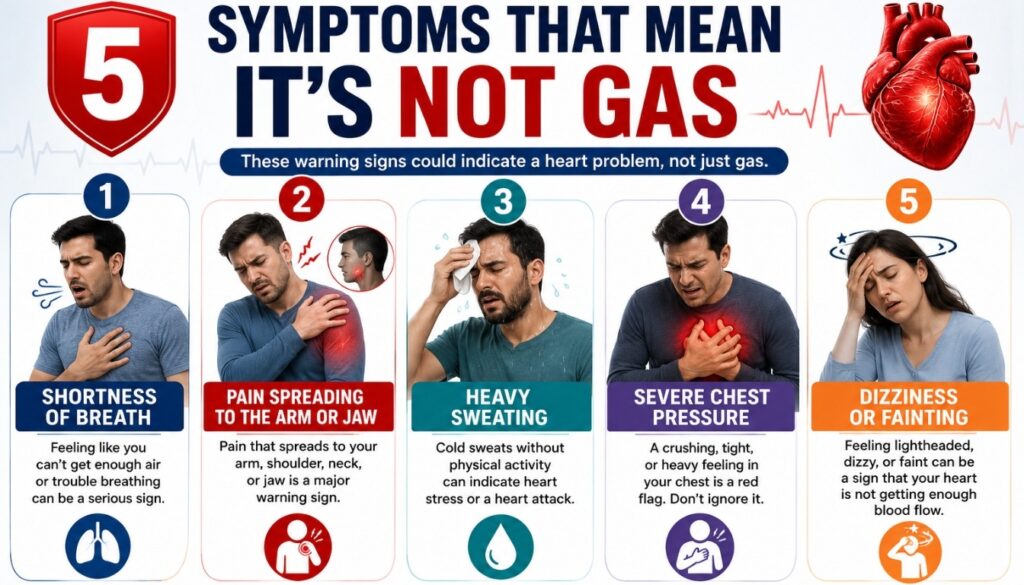
5 Symptoms That Mean It’s NOT Gas
Some chest pain symptoms should always be treated as a possible medical emergency.
Seek immediate medical help if chest pain occurs with:
1. Shortness of Breath
Difficulty breathing or feeling unable to take a deep breath.
2. Pain Spreading to the Arm or Jaw
Especially left arm, shoulder, neck, or jaw pain.
3. Heavy Sweating
Cold sweats without physical activity can indicate heart stress.
4. Severe Chest Pressure
A crushing or squeezing sensation in the chest is a major warning sign.
5. Dizziness or Fainting
Feeling weak, faint, or collapsing should never be ignored.
These symptoms may indicate a heart attack rather than gas pain.
Emergency Symptoms You Should Never Ignore
Call emergency medical help immediately if chest pain occurs with:
- Breathing difficulty
- Sweating
- Arm or jaw pain
- Severe weakness
- Dizziness or fainting
- Persistent chest pressure
Do not delay treatment or assume symptoms are caused only by acidity or gas.
Chest Pain Causes in Young Adults
Many younger individuals assume chest pain cannot be heart-related. While acidity and stress are common causes, heart problems can still occur in young adults due to:
- Smoking
- Obesity
- High stress
- Poor diet
- Diabetes
- High cholesterol
- Family history of heart disease
Even mild recurring chest discomfort should be medically evaluated if symptoms continue.
Other Causes of Chest Pain
Not all chest pain is caused by the heart or gas. Other possible causes include:
- Anxiety or panic attacks
- Muscle strain
- Lung infections
- Gastritis
- Costochondritis
- GERD
- Acid reflux
Proper medical evaluation helps identify the actual cause of symptoms.
What to Do When You Can’t Tell the Difference
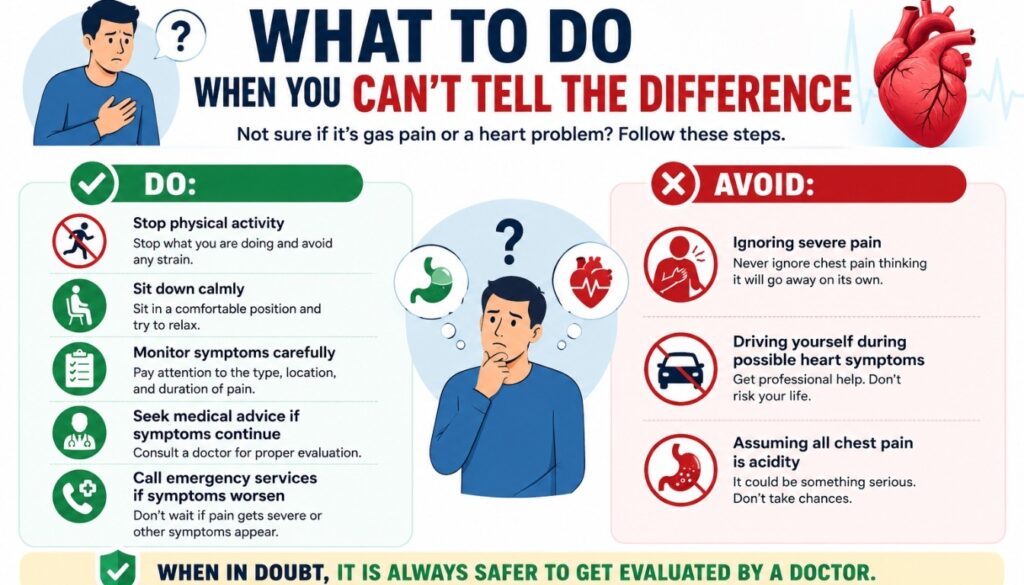
If you are unsure whether chest pain is caused by gas or the heart:
Do:
- Stop physical activity
- Sit down calmly
- Monitor symptoms carefully
- Seek medical advice if symptoms continue
- Call emergency services if symptoms worsen
Avoid:
- Ignoring severe pain
- Driving yourself during possible heart symptoms
- Assuming all chest pain is acidity
When in doubt, it is always safer to get evaluated by a doctor.
When Chest Pain Is Definitely NOT “Just Gas”
You should never assume chest pain is gas if:
- Pain lasts more than a few minutes
- Symptoms return repeatedly
- Pain occurs with sweating or breathlessness
- Pain spreads to the arm, neck, or jaw
- You have diabetes or BP problems
- You feel faint or extremely weak
These symptoms require urgent medical attention.
When to Visit CMCH Emergency — Better Safe Than Sorry
CMCH Hospital Chomu provides:
- 24/7 emergency support
- Cardiology consultations
- ECG and Echo testing
- Emergency heart evaluation
- Ambulance support
- Preventive heart screening
Patients across Chomu, Jaipur, Govindgarh, Reengus, and nearby areas trust CMCH for timely emergency care and cardiac evaluation.
If you experience persistent chest pain, breathing difficulty, or possible heart attack symptoms, immediate medical attention is strongly recommended.
Why People Often Ignore Heart Attack Symptoms
Many people delay treatment because they:
- Assume symptoms are gas or acidity
- Wait for symptoms to improve
- Fear hospital visits
- Do not expect heart problems at a young age
Unfortunately, delayed treatment increases the risk of severe heart damage.
Learn More:
8 Early Signs of a Heart Attack You Should Never Ignore
How Doctors Diagnose the Cause of Chest Pain
Doctors may recommend:
- ECG
- Blood tests
- Echo test
- BP monitoring
- Cardiac evaluation
- Acid reflux assessment
These tests help determine whether symptoms are digestive or heart-related.
heart check-up packages in Jaipur & Chomu
Conclusion
Chest pain caused by gas and heart-related chest pain can sometimes feel similar, but there are important differences. Symptoms such as bloating, acidity, and relief after burping are more commonly linked to gas or GERD. However, severe pressure, sweating, breathing difficulty, dizziness, and pain spreading to the arm or jaw should never be ignored.
If you are unsure whether symptoms are caused by chest discomfort gas or a heart problem, seeking medical evaluation is always the safest decision.
CMCH Hospital Chomu provides 24/7 emergency support, cardiac screening, and advanced heart care for patients across Jaipur and nearby regions.
FAQs
Can gas cause chest pain?
Yes, trapped gas, acidity, GERD, and acid reflux can cause chest discomfort or burning sensations.
How do I know if chest pain is gas or heart attack?
Gas pain usually improves with burping or antacids, while heart attack pain often feels like pressure and may occur with sweating or shortness of breath.
Can GERD cause chest tightness?
Yes, GERD and acid reflux can sometimes cause chest tightness and burning discomfort.
Can gas pain spread to the left side of the chest?
Yes, trapped gas and bloating can sometimes cause pain on the left side of the chest or upper abdomen.
Does chest pain from gas improve after burping?
In many cases, gas-related chest discomfort improves after burping, passing gas, or taking antacids.
When should chest pain be considered an emergency?
Chest pain should be treated as an emergency if it occurs with breathlessness, sweating, arm pain, jaw pain, dizziness, or fainting.
Can young adults get heart attacks?
Yes, smoking, obesity, stress, diabetes, and family history can increase heart attack risk even in younger individuals.
Disclaimer
This article is for informational purposes only and should not replace professional medical advice, diagnosis, or treatment. Consult a qualified medical professional for proper evaluation.

0 Comments