If you’re dealing with diabetes and want to eat foods that feel like home, you’re in the right place. This plan combines your favorite Indian dishes with healthy eating to control blood sugar. It’s designed to help you enjoy traditional tastes while keeping your diet balanced.
Looking for a meal plan that matches your life? Or do you need specific advice? This guide offers meals that fit your needs and help you manage diabetes better. Learn how easy, fitting meals can help you manage your diabetes.
Key Takeaways
- This diabetic diet plan emphasizes the importance of culture in food choices.
- Incorporates traditional Indian foods suitable for diabetes management.
- The diabetes diet chart Indian focuses on nutritional balance.
- Provides practical meal options with local ingredients.
- Encourages a deeper understanding of food group importance.
What Should a Diabetic Indian Diet Look Like?
A healthy diabetic diet is not about avoiding all carbohydrates or eating special foods. Instead, it focuses on balanced nutrition, portion control, and choosing foods that help maintain stable blood sugar levels throughout the day.
One of the simplest ways to plan meals is by following the Diabetes Plate Method. Half of your plate should consist of non-starchy vegetables such as spinach, cucumber, bottle gourd, cauliflower, cabbage, and tomatoes. One quarter should contain protein-rich foods such as dal, chana, rajma, paneer, eggs, fish, or chicken. The remaining quarter can include healthy carbohydrates such as whole wheat roti, bajra roti, jowar roti, brown rice, oats, or dalia.
This balanced approach helps slow glucose absorption, improves satiety, and reduces post-meal blood sugar spikes. Combined with regular meal timing and physical activity, it can play a major role in long-term diabetes management.
Understanding Diabetes and Its Dietary Needs
Diabetes is a condition that affects how the body processes blood sugar, or glucose. There are two main types: Type 1 and Type 2. Type 1 diabetes often starts in childhood and needs insulin. Type 2 diabetes is more common in adults and can be managed with lifestyle changes.
Gestational diabetes happens during pregnancy and usually goes away after the baby is born. Each type of diabetes has its own dietary needs.
Learning about diabetes is key to managing it. Eating foods with a low glycemic index helps control blood sugar. People with diabetes should eat complex carbs like whole grains and legumes. These foods are rich in fiber and slow down glucose release.
Knowing what to eat helps plan meals that fit individual health needs. This knowledge is vital for managing diabetes.
It’s important to watch not just carbs but also fiber intake. Fiber helps with digestion and can help control blood sugar. By making smart food choices, people can better manage their diabetes. Knowing what nutrients are needed helps lead a healthier life and improves overall health.
Importance of a Diabetic Diet Plan in India
The diabetes prevalence in India is a big health worry, with millions affected. India’s unique foods and eating habits need a special diabetic diet plan. This plan must fit local tastes and traditions.
India has a high diabetes rate, making diet management key. A good diet helps keep blood sugar in check and prevents diabetes problems. It’s important for better health and a healthier lifestyle.
Using local foods in a diabetic diet is meaningful and sustainable. It makes sticking to a healthy diet easier. It shows how vital a diabetic diet is for those with diabetes in India.
Overview of the 7-Day Indian Meal Plan
This 7-day meal plan is a detailed way to manage diabetes with an Indian diet. It uses traditional foods that fit dietary needs for diabetes control. Each day includes three meals and snacks to keep blood sugar levels steady and provide needed nutrients.
The plan makes healthy eating fun by mixing flavors and ingredients. Here’s a quick look at what each day offers:
| Day | Breakfast | Lunch | Dinner | Snacks |
| 1 | Idli with Sambar | Roti with Dal and Sabzi | Quinoa with Mixed Vegetables | Roasted Chana |
| 2 | Bajra Roti with Curd | Moong Dal with Steamed Rice | Vegetable Porridge | Seasonal Fruits |
| 3 | Poha with Peas | Chana Masala with Brown Rice | Palak Paneer with Roti | Yogurt |
| 4 | Oats Upma | Vegetable Khichdi | Grilled Fish with Salad | Nuts |
| 5 | Besan Cheela | Rajma with Quinoa | Tandoori Chicken with Veggies | Hummus with Carrot Sticks |
| 6 | Egg White Omelette | Kadhi with Brown Rice | Mixed Vegetable Curry | Fruit Chaat |
| 7 | Ragi Dosa with Sambar | Paniyaram with Coconut Chutney | Lentil Soup with Whole Grain Bread | Protein Bars |
This meal plan includes foods good for diabetes and celebrates Indian cuisine. Each dish is healthy, satisfying, and full of flavor. It ensures those with diabetes enjoy every meal.
Day 1: Breakfast, Lunch, and Dinner Menus
Starting your day with a diabetic meal plan is a great way to manage diabetes. It’s important to choose foods that are both tasty and healthy. This section offers delicious breakfast, lunch, and dinner options, tailored for Indian tastes and dietary needs.
Breakfast Options: Idli and Sambar
Begin your day with a warm plate of idli and sambar. Idli is made from fermented rice and lentil batter, perfect for diabetics. Sambar, a lentil-based vegetable soup, adds flavor and nutrition.
- Ingredients for Idli: 1 cup of rice, ½ cup of urad dal, salt.
- Ingredients for Sambar: 1 cup of toor dal, assorted vegetables (carrot, beans, and pumpkin), tamarind paste, spices.
This indian breakfast for diabetics gives you energy and helps manage blood sugar.
Lunch Choices: Roti with Dal and Sabzi
For lunch, try a meal of whole wheat roti, dal, and sabzi (vegetables). Each part is simple to make but packed with nutrients. Use little oil for cooking to keep it diabetic-friendly.
- Ingredients for Roti: 1 cup whole wheat flour, water, salt.
- Ingredients for Dal: 1 cup split yellow lentils cooked with spices.
- Variety of vegetables for Sabzi: Spinach, bell peppers, or cauliflower.
This meal gives you proteins and keeps you full without raising insulin levels.
Dinner Ideas: Quinoa with Mixed Vegetables
For dinner, choose a light but filling meal of quinoa with mixed vegetables. Quinoa is gluten-free and protein-rich, making it great for a diabetic-friendly dinner idea.
- Ingredients: 1 cup quinoa, zucchini, carrots, peas, and spices to taste.
This dish is not only filling but also packed with vitamins and minerals for health.
Day 2: Incorporating Rajasthani Foods
Adding Rajasthan specific foods to your diet can really help with diabetes. Day 2’s menu includes traditional Rajasthani dishes that taste great and help control blood sugar. Bajra roti is perfect for diabetes management and fits well with Indian vegetarian meals. Here’s how to add these tasty dishes to your meals.
Rajasthani Breakfast: Bajra Roti with Curd
Bajra, or pearl millet, is a great choice for breakfast. It has a low glycemic index, which helps keep blood sugar stable. Add fresh curd for extra probiotics and protein. Here’s how to make it:
- Mix bajra flour with water to form a dough.
- Roll out the dough into flat, round shapes.
- Cook on a hot griddle until golden brown on both sides.
- Serve hot with a side of curd.
Lunch: Moong Dal with Steamed Rice
This meal is both nutritious and filling. Moong dal (split green gram) is high in protein and low in glycemic index, making it good for diabetes. Pair it with steamed rice for a complete lunch. Here’s how to cook it:
- Boil moong dal until soft.
- Add spices and sauté with vegetables of your choice.
- Serve alongside a small portion of steamed rice.
Dinner: Vegetable Porridge
Vegetable porridge is a light yet satisfying dinner option. It combines various veggies with grains. You can adjust it based on what’s in season, focusing on low GI ingredients. Here’s how to make it:
- Cook a mix of grains such as barley and oats with water.
- Add diced vegetables like carrots, beans, and spinach.
- Season and simmer until the vegetables are tender.
Adding these Rajasthani dishes to your diet makes meals more authentic and helps manage diabetes. They are nutrient-rich and balanced. The blend of flavors and health benefits makes for a delightful dining experience.
Understanding Glycemic Index in Indian Foods
The glycemic index (GI) is key for managing diabetes. It shows how fast foods raise blood sugar. Knowing about GI helps pick foods that keep blood sugar stable.
Foods with a low GI increase glucose slowly. This makes them good for a diabetic diet. Traditional Indian foods like legumes and lentils are low GI.
Adding these foods to meals keeps you full and healthy. But, foods like white bread and sugary snacks raise blood sugar quickly.
Here’s a table of common Indian foods by their GI:
| Food Item | Glycemic Index | Category |
| Basmati Rice | 50 | Medium GI |
| Whole Wheat Roti | 71 | High GI |
| Chickpeas | 28 | Low GI |
| Pulses (Lentils) | 21 | Low GI |
| Potato | 78 | High GI |
Mixing high-GI foods with low-GI ones makes meals better. This slows down digestion and controls glucose release. It helps manage diabetes and improves health.
Portion Sizes and Meal Timing for Better Management
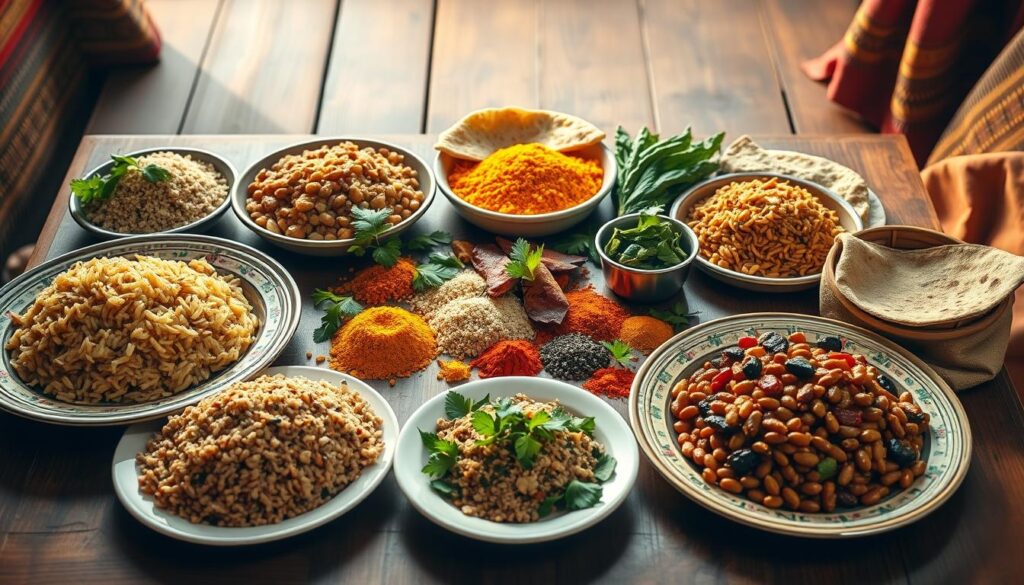
Managing diabetes well means paying close attention to how much food you eat and when. Knowing the right amount of food helps keep blood sugar levels stable. This prevents big spikes or drops in blood sugar.
Having meals at regular times is key to managing blood sugar. Meals should be spread out to keep energy levels steady. Here are some tips for good meal timing:
- Eat breakfast within an hour of waking up to kickstart metabolism.
- Plan three balanced meals spaced evenly, with healthy snacks in between if necessary.
- Avoid skipping meals, as this can lead to excessive hunger and poor food choices later on.
- Try to have dinner at least two to three hours before bedtime to enhance digestion and nutrient absorption.
Following these tips helps with portion control and improves health. Adjusting meal times based on your lifestyle and preferences makes managing diabetes easier.
Day 3 to Day 7: Complete Weekly Meal Guide
Days 3 to 7 of the week-long diabetic meal plan offer a variety of delicious and healthy Indian meals. These meals are perfect for diabetics, focusing on balanced nutrition without sacrificing taste. Each day includes customized breakfast, lunch, and dinner ideas to keep blood sugar levels stable.
Daily Breakfast Suggestions
- Day 3: Oats upma with vegetables paired with a glass of buttermilk.
- Day 4: Whole wheat toast with avocado and a sprinkle of sesame seeds.
- Day 5: Smoothie made with spinach, cucumber, and a small banana.
- Day 6: Besan chilla stuffed with capsicum and onions served with mint chutney.
- Day 7: Moong dal chilla with a side of homemade yogurt.
Healthy Lunch and Dinner Combinations
| Day | Lunch | Dinner |
| Day 3 | Brown rice with palak dal and sautéed karhi. | Grilled chicken with steamed broccoli and carrots. |
| Day 4 | Quinoa salad mixed with chickpeas and chopped vegetables. | Methi thepla with curd and a side of salad. |
| Day 5 | Vegetable khichdi made with brown rice and lentils. | Stuffed bell peppers with low-fat cheese and spices. |
| Day 6 | Whole wheat tortillas filled with grilled vegetables and tofu. | Roti with mixed vegetable curry and a small serving of raita. |
| Day 7 | Chana masala with brown rice. | Paneer tikka with a side of steamed greens. |
Foods to Include and Avoid for Diabetics
Managing diabetes with diet means choosing foods carefully. Eating low glycemic Indian foods helps control blood sugar. This section will cover key foods for diabetics in India, including good fruits for a diabetic diet.
Low Glycemic Indian Foods
Adding low glycemic Indian foods to meals is key for stable blood sugar. These foods digest slowly, causing blood glucose to rise gradually. Here are some good options:
- Whole grains like oats, barley, and quinoa
- Legumes including chickpeas, lentils, and kidney beans
- Non-starchy vegetables such as spinach, broccoli, and bell peppers
- Nuts and seeds, providing healthy fats and protein
- Fermented foods like yogurt, aiding in digestive health
Fruits for Diabetics: What to Eat and What to Avoid
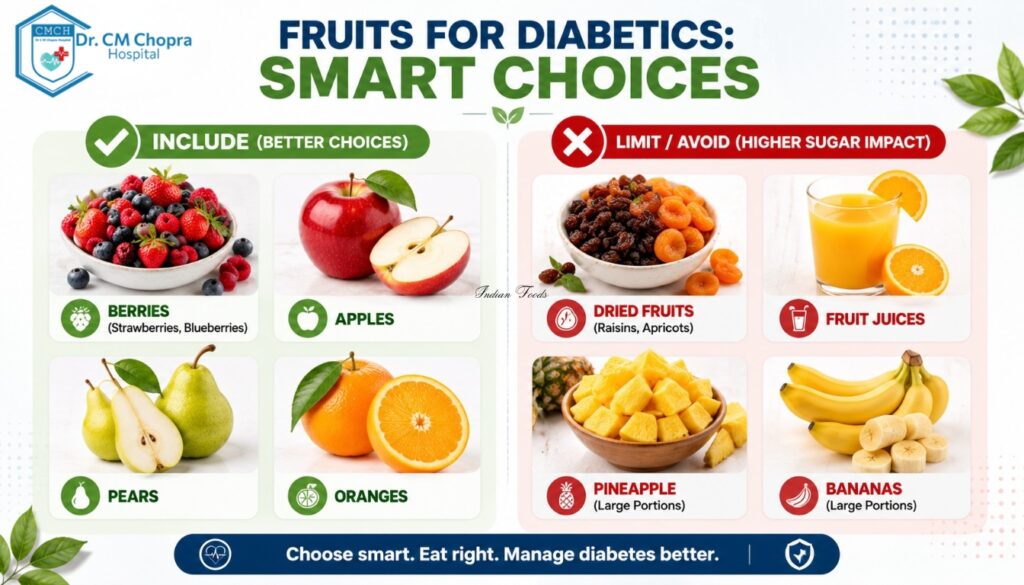
Fruits are important in a diabetic diet, but not all are good. Choose fruits with a lower glycemic index to prevent blood sugar spikes. Here’s a guide:
| Fruits to Include | Fruits to Avoid |
| Berries (strawberries, blueberries) | Watermelon |
| Apples | Pineapple |
| Pears | Bananas |
| Oranges | Dried fruits (raisins, apricots) |
Healthy Snacking Options for Diabetics
Finding snacks for diabetics can be tough. Snacks should taste good and help control blood sugar. Eating a mix of healthy foods keeps energy up without harming health. Here are some tasty and healthy snack ideas for diabetics.
Nutritious Snack Ideas: Roasted Chana and Fruits
Roasted chana is a great snack because it’s high in protein and keeps blood sugar in check. Adding fruits to it brings in vitamins and minerals. Other good snacks include:
- Vegetable sticks with hummus
- Curd with mixed seeds
- Whole grain crackers with cheese
- Nuts like almonds and walnuts in moderation
These snacks are not only tasty but also give you energy without raising blood sugar too much.
Recipes for Diabetic-Friendly Indian Snacks
Making snacks for diabetics can be easy and fun. Here are two simple recipes to try:
- Masala Roasted Chana:Ingredients: Black chana, olive oil, salt, and spices (cumin, chili powder).
- Instructions: Roast chana with olive oil and spices until golden brown. Enjoy warm or at room temperature.
- Besan Chilla:Ingredients: Gram flour, chopped vegetables (like spinach and tomatoes), spices, and water.
- Instructions: Mix ingredients into a batter and cook on a non-stick skillet until crispy. Serve with mint chutney.
These Indian snacks are easy to make and fun to eat. They’re perfect for snacking all day. Just remember to eat them in the right amounts and enjoy them mindfully.
Tips for Sustainable Healthy Eating Practices
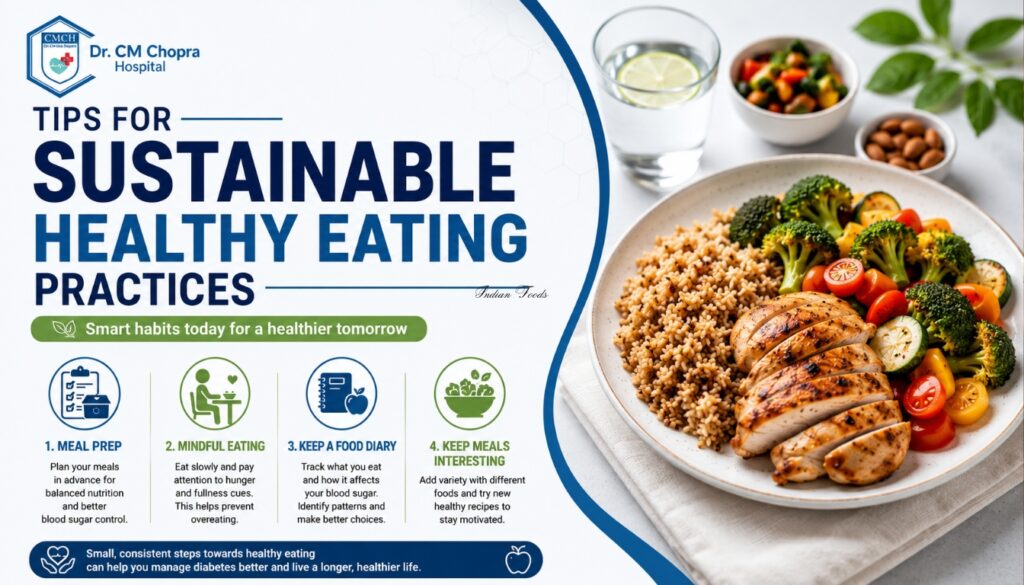
For diabetics, eating healthily for the long term needs careful planning. Meal prep is a great way to do this. It lets you plan meals ahead, keeping your diet balanced and blood sugar in check. This method also helps avoid unhealthy choices.
Mindful eating is key to healthy eating habits. Paying attention to how much you eat and what you choose helps you listen to your body. It makes you more aware of your food choices, leading to better eating habits.
Keeping a food diary is another helpful tool. It helps you track what you eat and see patterns. This can show you what might lead to unhealthy choices, helping you make better food decisions.
It’s important to keep meals interesting to stick to a diabetic diet. Trying new foods and recipes can make eating more enjoyable. Here’s a table of diverse food options to inspire your cooking:
| Meal Type | Food Option | Benefits |
| Breakfast | Oats with Nuts and Berries | Rich in fiber, supports blood sugar control |
| Lunch | Brown Rice with Rajma | Low glycemic index, provides essential nutrients |
| Dinner | Palak Paneer with Whole Wheat Roti | High in iron and protein, balanced meal |
| Snack | Sliced Apple with Peanut Butter | Healthy fats, fiber-rich, promotes satiety |
By following these tips, you can make healthy eating a sustainable part of your life. Focus on preparation, mindfulness, and variety. This way, managing diabetes through diet can be both balanced and enjoyable.
Consult Our Diabetes Team at CMCH Chomu
Managing diabetes successfully requires more than just medication. Personalized nutrition guidance, regular monitoring, and lifestyle counseling can help patients achieve better blood sugar control and reduce the risk of complications.
At CMCH Chomu, our diabetes care team helps patients create practical and sustainable meal plans based on their age, lifestyle, medical history, and blood sugar levels.
Diabetes Services Available at CMCH
- Diabetes specialist consultations
- HbA1c testing
- Blood sugar monitoring
- Personalized diet plans
- Weight management guidance
- Diabetes medication management
- Preventive health check-ups
Patients from Chomu, Jaipur, Govindgarh, Reengus, and the Jaipur-Sikar Road corridor can access comprehensive diabetes care and ongoing support through our diabetes OPD.
If you have recently been diagnosed with diabetes, have prediabetes, or are struggling to maintain healthy blood sugar levels, consulting a diabetes specialist and dietitian can help you develop a treatment plan that works for your lifestyle.
Continue Learning About Diabetes
If you’re looking to understand diabetes beyond diet, these expert guides from CMCH can help you make informed decisions about your health:
- Sugar Level Normal Range: Complete Chart by Age, Gender & Health Condition
Learn the normal fasting, post-meal, and random blood sugar levels, understand what your readings mean, and know when to seek medical advice. - Type 2 Diabetes Treatment in India: Medications, Lifestyle Changes & When to See a Doctor
Explore treatment options for type 2 diabetes, including medications, insulin therapy, lifestyle modifications, exercise, and long-term diabetes management.
These resources complement your diet plan and provide practical guidance for monitoring blood sugar, understanding treatment options, and reducing the risk of diabetes-related complications.
Explore more health education articles on the CMCH Blog for trusted medical information and expert healthcare advice.
Conclusion
Managing diabetes through diet is key. A 7-day meal plan in this article shows how to do it with traditional Indian foods. It makes sure meals are both healthy and tasty.
Think about how each meal affects your health. By following these tips, you can manage your diabetes better. Also, getting help from diet experts can make your plan even better.
There’s a downloadable PDF of the meal plan to help you. Start these healthy habits and see how they improve your life. It makes handling diabetes easier.
FAQ
What is a diabetic diet plan in India?
A diabetic diet in India focuses on traditional foods. It aims to manage blood sugar levels. It balances carbs, proteins, and fats with low glycemic foods.
How does the glycemic index affect diabetes management?
The glycemic index (GI) shows how fast a food raises blood sugar. Low GI foods, like whole grains and legumes, are good for diabetics. They cause blood sugar to rise slowly.
What are some healthy breakfast options for diabetics in India?
Healthy breakfasts for diabetics in India include Idli and Sambar, Bajra Roti with curd, and oatmeal with nuts. These options are nutritious and don’t cause blood sugar spikes.
Can I include fruits in my diabetes diet?
Yes, fruits are okay in a diabetes diet. Choose low GI fruits like berries, guavas, and apples. Avoid high sugar fruits like bananas and mangoes to avoid blood sugar spikes.
What should I avoid in my diabetic meal plan?
Avoid foods high in refined sugars and carbs, like sugary snacks, white rice, and white bread. Also, limit fried foods and high-fat snacks to control blood sugar.
Are there any regional foods suitable for diabetics?
Yes, many regional foods in India are good for diabetics. Moong Dal, Bajra Roti, and various vegetables are examples. Adding these to your meals can help keep your diet healthy.
How important are portion sizes in a diabetic diet?
Portion sizes are key in a diabetic diet. They help control carbs and calories. Monitoring portions prevents blood sugar spikes and helps with weight control.
Is consulting a dietitian necessary for managing diabetes?
Yes, getting advice from a dietitian is very helpful. They can make a meal plan tailored to your needs and health conditions.
Can I snack while on a diabetic meal plan?
Yes, snacking is encouraged in a diabetic meal plan. Choose healthy snacks like roasted chana, nuts, and low-sugar fruits. They keep your energy up without harming your blood sugar.



0 Comments