High blood pressure, or hypertension, often develops without obvious symptoms. Over time, uncontrolled blood pressure can increase the risk of heart attack, stroke, heart failure, kidney disease and vision problems.
Lifestyle changes can play an important role in lowering blood pressure. A balanced diet, reduced salt intake, regular exercise, weight management, quality sleep and avoiding tobacco may improve readings and reduce cardiovascular risk. However, natural methods do not replace prescribed treatment when medication is medically necessary. WHO recommends lifestyle improvements alongside regular monitoring and appropriate medicines for people who need them.
This guide explains how to lower blood pressure naturally using 12 practical, evidence-based methods adapted for Indian eating habits and everyday routines.
Can You Lower Blood Pressure Without Medication?
Some people with mildly elevated blood pressure may improve their readings through consistent lifestyle changes. The result depends on the starting blood pressure, age, body weight, diet, activity level and whether the person has diabetes, kidney disease or cardiovascular disease.
Lifestyle measures are especially useful for people with elevated blood pressure or early hypertension. They also remain important for people already taking medicine because healthy habits can support better control.
However, not everyone can safely lower BP without medication. People with persistently high readings, Stage 2 hypertension or a high risk of heart and kidney complications may require prescribed treatment in addition to lifestyle changes.
Do not stop blood pressure medicine because a few readings have become normal. A normal reading may mean that the medicine and lifestyle plan are working.
Method 1–3: Diet Changes That Make the Biggest Difference
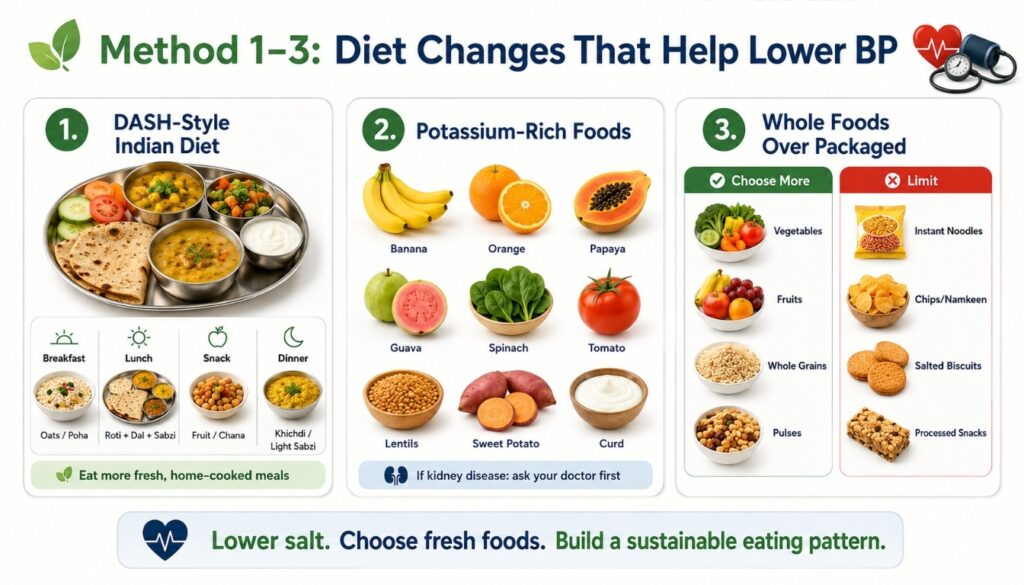
Method 1: Follow a DASH-style Indian diet
DASH stands for Dietary Approaches to Stop Hypertension. It is a flexible eating pattern developed to support healthy blood pressure. It emphasises vegetables, fruits, whole grains, pulses, low-fat dairy, nuts, seeds and suitable sources of lean protein while limiting sodium, added sugar and saturated fat.
A DASH diet in India does not require imported or expensive foods. It can be followed using familiar meals.
| Meal | Indian DASH-style option |
| Breakfast | Vegetable oats, dal chilla, poha with vegetables or unsweetened daliya |
| Lunch | Roti, dal, seasonal sabzi, salad and plain curd |
| Evening snack | Fruit, roasted unsalted chana or a small portion of unsalted nuts |
| Dinner | Vegetable khichdi, dal with vegetables or roti with a light sabzi |
| Drinks | Water, chaas without extra salt or unsweetened beverages |
Reduce deep-fried food, creamy gravies, processed meat, bakery products and highly salted packaged snacks. The goal is not a temporary “BP diet” but a sustainable eating pattern.
Method 2: Eat more potassium-rich foods
Potassium helps the body balance some of the effects of sodium and supports normal blood pressure regulation. WHO notes that adequate potassium from food can help counter the adverse effect of excess sodium.
Indian potassium-rich foods include:
- Bananas and oranges
- Papaya and guava
- Spinach and other green vegetables
- Tomatoes
- Beans and lentils
- Sweet potatoes
- Plain curd
- Coconut water in suitable patients
People with kidney disease or those taking certain medicines should not significantly increase potassium without speaking to a doctor. Excess potassium can be dangerous when the kidneys cannot remove it properly.
Method 3: Choose whole foods over packaged food
A large amount of dietary sodium can come from processed or packaged food rather than only from the salt added while cooking.
Choose fresh vegetables, fruits, whole grains and home-cooked meals more often. Check food labels for sodium and compare similar products before buying.
Foods commonly high in sodium include instant noodles, sauces, soup mixes, chips, salted biscuits, processed cheese and ready-made snacks. Reducing these products supports a heart-healthy blood pressure diet in India.
Method 4–6: Exercise, Weight and Sleep
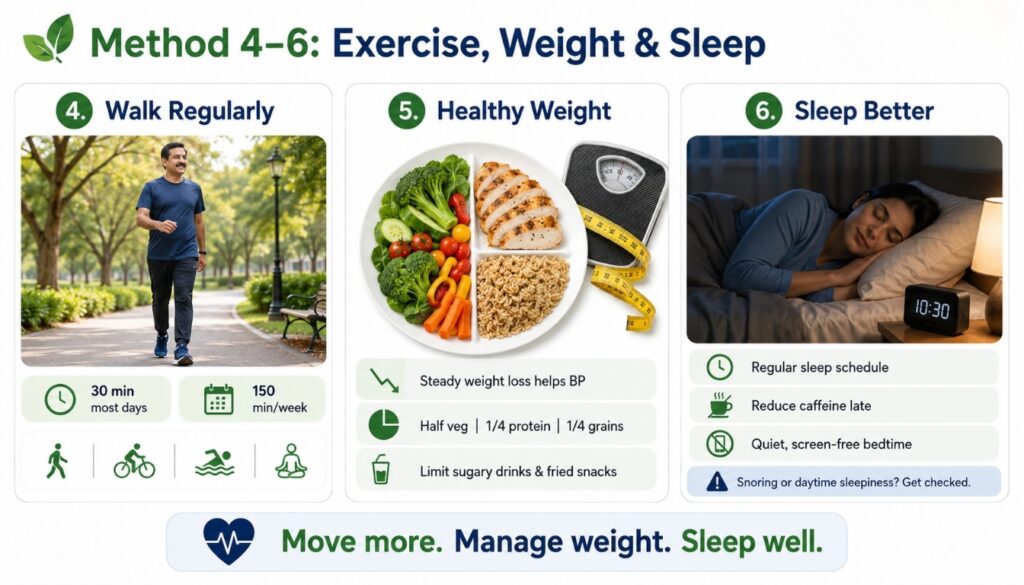
Method 4: Walk for about 30 minutes most days
Regular physical activity helps the heart pump more efficiently and can support lower blood pressure, improved weight control and reduced stress.
Aim for approximately 150 minutes of moderate-intensity aerobic activity each week. This can be achieved through brisk walking for around 30 minutes on five days of the week.
You can begin with shorter sessions, such as three 10-minute walks, and gradually increase the duration. Cycling, swimming, dancing and yoga may also be helpful.
People with very high blood pressure, chest pain, severe breathlessness or known heart disease should consult a doctor before beginning strenuous exercise.
Method 5: Work towards a healthy body weight
Excess body weight makes the heart work harder and is associated with a higher risk of hypertension, diabetes and sleep apnoea.
Even gradual weight reduction can support better blood pressure control in people who are overweight. The aim should be steady, sustainable progress through portion control, regular movement and balanced food—not crash dieting.
A simple strategy is to make half the plate vegetables, one quarter protein and one quarter whole grains or another suitable carbohydrate. Limit sugary drinks and frequent fried snacks.
Method 6: Prioritise good-quality sleep
Poor sleep may make blood pressure harder to control. Repeated sleep deprivation can also increase appetite, stress and daytime fatigue, making it more difficult to exercise and maintain a healthy weight.
Try to follow regular sleeping and waking times. Reduce caffeine late in the day, keep the bedroom quiet and limit screen exposure before bed.
Loud snoring, choking during sleep, morning headaches and severe daytime sleepiness may suggest sleep apnoea, which is associated with hypertension. Seek medical evaluation if these symptoms are present.
Method 7–9: Reducing Salt, Smoking and Alcohol
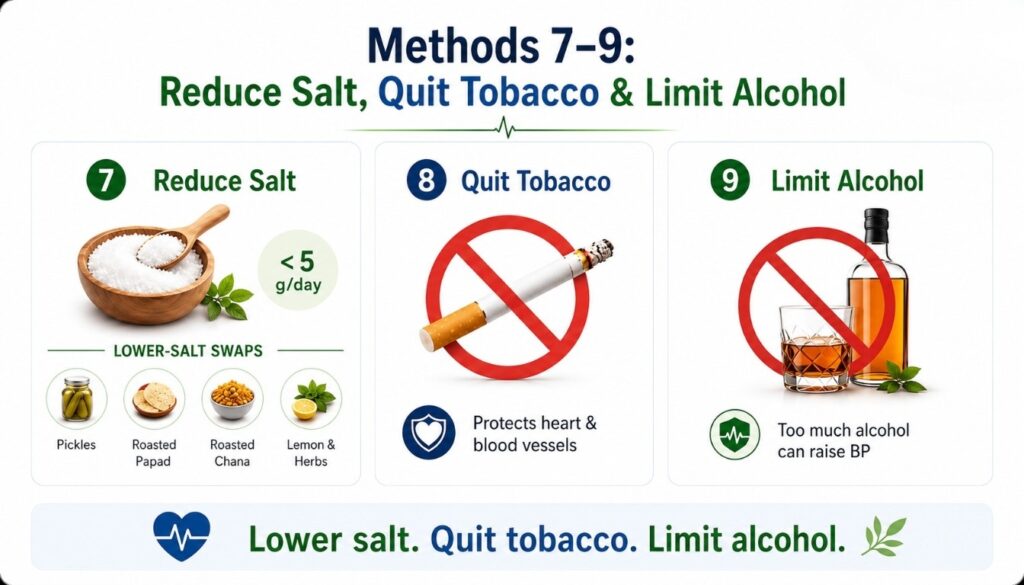
Method 7: Reduce daily salt intake
Salt reduction is one of the most important methods for people searching for how to reduce high blood pressure naturally.
WHO recommends consuming less than 5 grams of salt per day, approximately one teaspoon from all sources combined. This includes salt already present in food as well as salt used during cooking or added at the table.
Indian cooking may include several hidden sources of sodium:
| High-salt item | Practical alternative |
| Pickles | Use a very small serving occasionally |
| Papad | Limit frequency or choose roasted portions |
| Namkeen | Replace with unsalted roasted chana |
| Salted biscuits | Choose fruit or an unsalted snack |
| Packaged sauces | Use fresh herbs, lemon and spices |
| Extra table salt | Remove the salt shaker from the table |
Do not stop eating all traditional foods. Control serving size and consider the total salt consumed throughout the day.
Method 8: Stop smoking and tobacco use
Smoking and chewing tobacco damage blood vessels and significantly increase cardiovascular risk. Tobacco may also temporarily raise heart rate and blood pressure.
Quitting does not only support blood pressure management; it lowers the overall risk of heart attack, stroke and several cancers. WHO recommends avoiding all tobacco and nicotine products.
People who find quitting difficult can ask a healthcare professional about counselling and medically appropriate cessation support.
Method 9: Avoid or limit alcohol
Too much alcohol can raise blood pressure and interfere with medicines. People who do not drink should not begin drinking for supposed heart benefits.
The safest approach for many patients with hypertension is to avoid alcohol. Those who drink should discuss safe limits with their doctor, especially if they have liver disease, uncontrolled hypertension or take multiple medicines. The American Heart Association advises limiting alcohol because heavy or regular consumption can worsen blood pressure.
Method 10–12: Stress Management and Monitoring
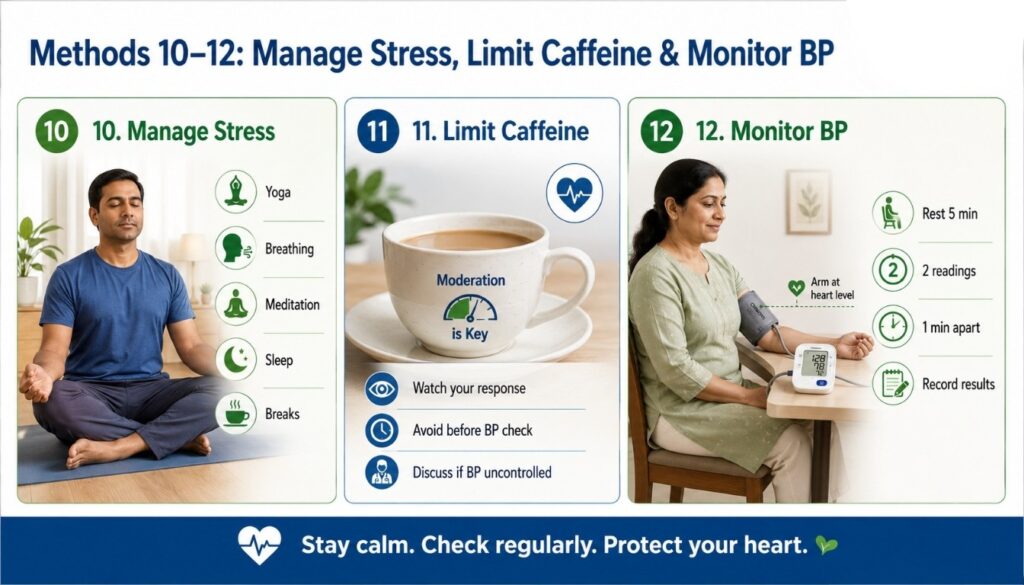
Method 10: Practise yoga, breathing or relaxation
Stress does not always directly cause long-term hypertension, but it can temporarily increase blood pressure and encourage unhealthy coping habits such as smoking, overeating or poor sleep.
Useful stress-management practices include:
- Slow breathing exercises
- Meditation
- Gentle yoga
- Spending time outdoors
- Taking short breaks during work
- Maintaining regular sleep
- Speaking with a counsellor when stress becomes persistent
Yoga for hypertension should be gentle and comfortable. Avoid difficult postures or breath-holding exercises without professional guidance, particularly if blood pressure is poorly controlled.
Method 11: Limit caffeine when it affects your readings
Tea and coffee can temporarily raise blood pressure in some people. The effect varies depending on caffeine habits and individual sensitivity.
You do not necessarily need to stop all caffeine. Check your blood pressure before caffeine and again later on a different day to observe whether it consistently affects your readings. Avoid caffeine for at least 30 minutes before checking BP.
People with severely uncontrolled hypertension should discuss caffeine intake with their doctor rather than relying on general advice.
Method 12: Monitor your blood pressure regularly
Home monitoring can show whether lifestyle changes and medicines are working. Use a validated upper-arm digital BP monitor with the correct cuff size.
Before checking:
- Avoid smoking, caffeine and exercise for 30 minutes.
- Empty your bladder.
- Rest quietly for five minutes.
- Sit with your back supported and feet flat.
- Keep your arm supported at heart level.
- Take two readings about one minute apart.
Record the date, time, readings, pulse and whether medicine was taken. Do not change treatment based on one isolated result.
When Natural Methods Are Not Enough
Lifestyle changes are valuable, but they may not lower blood pressure sufficiently for every patient.
Medication may be required when:
- Blood pressure remains repeatedly high
- Readings are in the Stage 2 range
- The person has diabetes or kidney disease
- There is a history of heart attack or stroke
- Lifestyle changes do not provide adequate control
- A doctor identifies a high cardiovascular risk
- Hypertension occurs during pregnancy
Some people need more than one medicine. This does not mean that they have failed. Hypertension is influenced by genetics, age, kidney function, hormones and other factors that cannot always be controlled through lifestyle alone.
Do not use herbal powders, unregulated supplements or “natural BP cures” as substitutes for prescribed treatment. Some products can interact with medicine or raise blood pressure.
Seek emergency care if a severely elevated reading occurs with chest pain, severe breathlessness, confusion, weakness, difficulty speaking or sudden vision changes.
Blood Pressure Consultation at CMCH Hospital Chomu and Jaipur Road
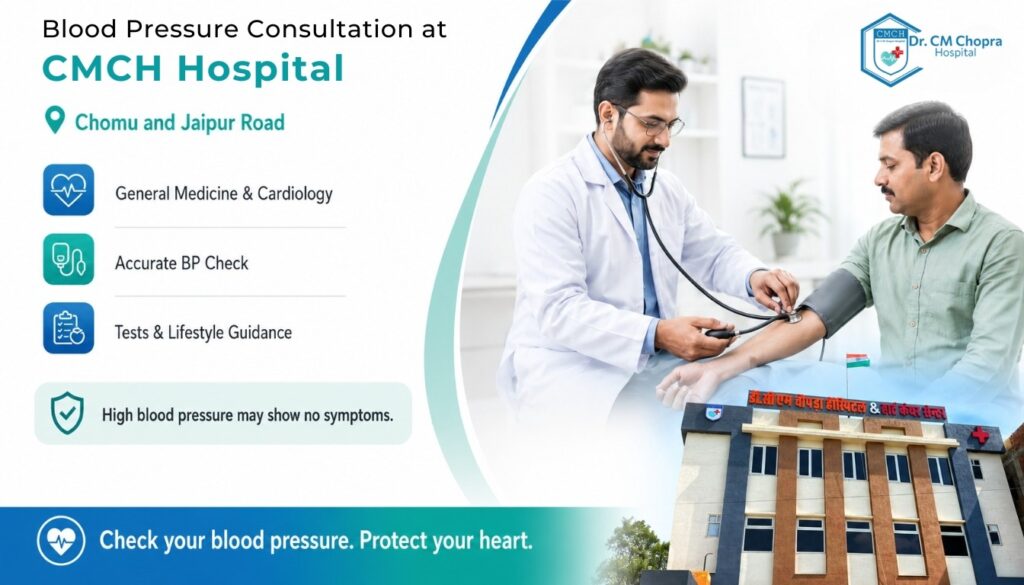
CMCH Hospital does not currently advertise a separately named “BP Clinic” or “BP OPD.” The accurate wording is that patients can seek blood pressure and hypertension consultation through the hospital’s General Medicine and Cardiology services.
Patients from Chomu, Jaipur Road and nearby areas can visit CMCH Hospital for blood pressure assessment and hypertension management. The hospital’s official website lists cardiology and general-medicine expertise and gives its location as Ganesh Vihar Colony, Jaipur Road, Chomu, Rajasthan.
Depending on the patient’s readings, symptoms and medical history, the doctor may recommend repeat BP measurement, blood sugar testing, cholesterol testing, kidney-function tests, ECG when clinically required, medicine review and lifestyle counselling.
Regular screening is important because hypertension frequently causes no clear symptoms. Do not wait for headaches or dizziness before getting your blood pressure checked.
Related Resources (Recommended for This Blood Sugar Blog)
- Blood Pressure Normal Range by Age: Complete Chart for Children, Adults and Seniors – Understand healthy systolic and diastolic readings for different age groups and learn how to measure blood pressure correctly.
- High Blood Pressure Symptoms & Hypertension: The Complete Guide – Learn about hypertension symptoms, causes, BP stages, risk factors, treatment options and when high blood pressure requires urgent care.
- Sugar Level Normal Range: Complete Chart by Age, Gender & Health Condition – Understand fasting, post-meal, and random blood sugar values with a detailed reference chart.
- Type 2 Diabetes Treatment in India: Medications, Lifestyle Changes & When to See a Doctor – Learn about diabetes medications, insulin therapy, exercise, and long-term blood sugar management.
- Diabetic Diet Plan for Indians: A 7-Day Meal Plan with Regional Foods – Discover a practical Indian meal plan, portion control tips, and diabetic-friendly foods for healthier glucose management.
- Heart Check-Up Cost in Jaipur & Chomu: Packages, What’s Included & Why It Matters – Regular heart screenings are especially important for people living with diabetes, as they have a higher risk of cardiovascular disease.
- ECG Test in Chomu & Jaipur: Cost, Preparation & What to Expect – Learn when an ECG is recommended and how it helps detect heart conditions associated with diabetes.
Explore more expert health guides on the CMCH Health Blog for trusted medical information and preventive healthcare advice.
Frequently Asked Questions
Can high blood pressure be reduced naturally?
Lifestyle measures may reduce blood pressure, especially when readings are mildly elevated. However, some people also require prescribed medication.
How quickly can lifestyle changes lower BP?
The response varies. Dietary changes and reduced sodium may improve readings within weeks, while weight management and long-term exercise usually require consistent effort over several months.
Is walking enough for high blood pressure?
Brisk walking is an effective form of moderate exercise. Aim for around 150 minutes weekly, unless a doctor recommends a different activity level.
Which Indian foods are suitable for high BP?
Vegetables, fruits, dal, beans, whole grains, unsalted nuts, seeds and plain curd can fit a heart-healthy diet. Limit salt, pickles, papad, namkeen and packaged snacks.
Can I stop BP medicine after changing my lifestyle?
No. Never stop or reduce medication without consulting your doctor. Improved readings may indicate that the current treatment is effective.
Takeaway
Learning how to lower blood pressure naturally begins with practical, sustainable habits. Follow a DASH-style Indian diet, reduce salt, walk regularly, maintain a healthy weight, sleep well, avoid tobacco and alcohol, manage stress and monitor your readings.
Natural methods can support blood pressure control, but they are not a replacement for medical care. For repeated high readings or help creating a safe treatment plan, consult the General Medicine or Cardiology team at CMCH Hospital, Chomu.
Medical Disclaimer
This article is intended for general health education only. It does not replace medical diagnosis or treatment. Do not stop, start or change blood pressure medication without consulting a qualified healthcare professional.

0 Comments