Heart attack symptoms in women often searched as heart attack symptoms female or women heart attack signs can differ from the “classic” picture most people expect. Chest pain or discomfort is still the most common symptom in women, but women are more likely than men to also experience jaw pain, back pain, nausea, extreme fatigue, or breathlessness alongside it.
This gap in recognition is one of the main reasons women delay seeking treatment, and delayed treatment increases the risk of severe heart damage.
Patients from Chomu, Jaipur Road, Govindgarh, Reengus and nearby areas can consult the Cardiology team at CMCH Hospital, Chomu, for symptom evaluation, cardiac risk assessment and diagnostic testing.
Quick answer: Chest pain or discomfort is still the most common heart attack symptom in women, but women are more likely than men to also experience jaw or back pain, nausea, unusual fatigue and shortness of breath. These additional symptoms can make a heart attack easier to mistake for indigestion, stress or anxiety.
Why Are Heart Attack Symptoms Different in Women?
The reason for female heart attack different symptoms is rooted in biology, not just perception.
Hormonal protection, and its loss. Estrogen has a protective effect on blood vessels during a woman’s reproductive years. This is one reason heart attacks are less common in younger women. Estrogen levels drop sharply after menopause, and cardiovascular risk rises in the years that follow.
Smaller blood vessels, coronary microvascular disease. Women tend to have smaller coronary arteries than men and are more prone to coronary microvascular disease dysfunction or damage to the small vessels feeding the heart, which can include abnormal narrowing or spasm rather than a single major blockage. This does not always show up clearly on a standard angiogram, which can delay diagnosis. The American Heart Association notes this condition is more common in women.
Additional physiological factors. Pregnancy-related conditions, PCOS and autoimmune disorders all more common in women add cardiovascular risk pathways that do not apply to men.
Common Heart Attack Symptoms in Women
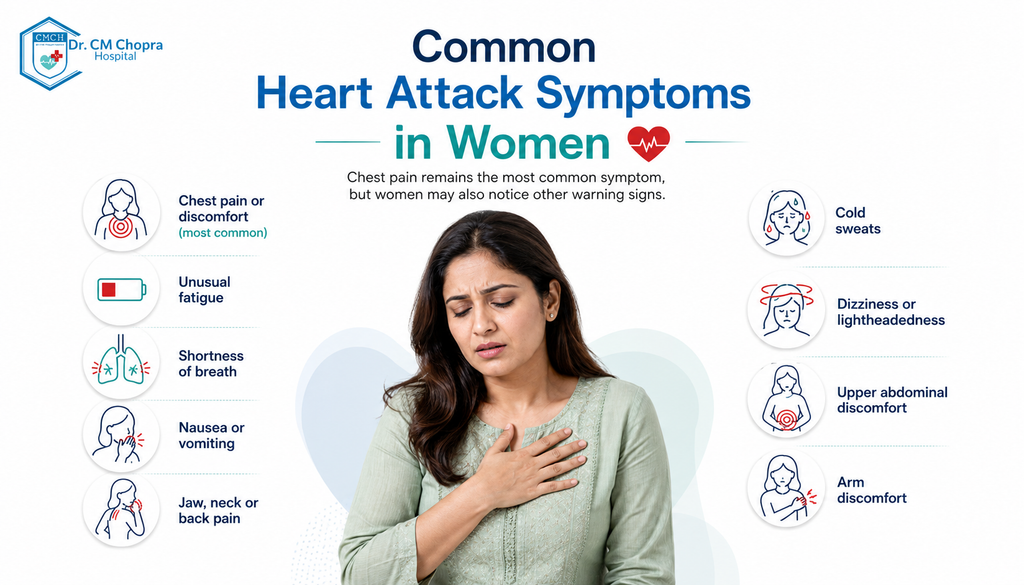
Chest pain or discomfort remains the most common heart attack symptom in women. However, women may also experience symptoms such as nausea, back or jaw pain, unusual fatigue and shortness of breath. Key women cardiac symptoms to watch for:
- Extreme, unusual fatigue, even after adequate rest
- Shortness of breath, with or without chest discomfort
- Heart attack women nausea nausea or vomiting, often mistaken for a stomach issue
- Heart attack women back pain jaw, neck or back pain, particularly between the shoulder blades
- Cold sweats without physical exertion
- Lightheadedness or dizziness
- Pressure or discomfort in the upper abdomen
- Discomfort in one or both arms
Because these accompanying symptoms are often milder and more spread out than the sudden chest-clutching heart attack most people picture, some women do not realize a cardiac event is occurring alongside chest discomfort. This is separate from a true silent heart attack, where a person has no recognized symptoms at all, or symptoms so mild they go unnoticed and it is only identified later, often through an ECG or imaging done for another reason.
Symptoms Women Often Mistake for Something Else
These symptoms are frequently brushed off by patients and, at times, by healthcare providers.
| Symptom | Commonly mistaken for |
| Nausea and fatigue | Viral infection or overwork |
| Jaw or back pain | Poor posture, sleeping wrong, dental issues |
| Shortness of breath | Anxiety, low fitness, seasonal allergies |
| Upper abdominal discomfort | Acidity or gas |
| Racing heart, breathlessness | Panic attack |
Heart attack vs. panic attack in women can be genuinely difficult to tell apart, since both may cause chest tightness, breathlessness and a sense of unease. There is no reliable way to distinguish the two without medical evaluation — differences in timing or triggers are not a safe way to self-diagnose at home. Any new or unexplained combination of these symptoms should be treated as a medical emergency rather than assumed to be anxiety.
Why Women Are More Likely to Delay Getting Help
Research consistently shows women wait longer than men to seek emergency care during a heart attack. Common reasons include:
- Symptoms don’t match expectations. When symptoms include fatigue, nausea, breathlessness or jaw/back discomfort alongside mild or less-recognised chest symptoms, some women may not immediately suspect a heart problem.
- Misdiagnosis as anxiety or stress. Breathlessness and palpitations overlap with panic symptoms, so women are sometimes told — by themselves or by doctors — that they are “just stressed.”
- Caregiving priorities. Many women, particularly in Indian households, are primary caregivers and may downplay their own symptoms to avoid disrupting the family.
- Normalizing pain and fatigue. Chronic tiredness is often treated as an unavoidable part of daily life rather than a warning sign.
- Lower awareness of female-specific symptoms, since cardiac research and public messaging have historically centered on male symptom patterns.
This delay has measurable consequences. Indian coronary angiography data has shown a higher overall mortality rate in women than in men following cardiac events, despite differences in how their disease presented — underlining why timely recognition matters.
Risk Factors Specific to Women in India
Heart disease among women in India is an increasingly important public-health concern. A peer-reviewed analysis of Global Burden of Disease, NCD Risk Factor Collaboration and National Family Health Survey data found that annual ischemic heart disease mortality among Indian women rose from about 0.32 million to 0.62 million between 2000 and 2017 — an increase of roughly 94%, steeper than the rise seen in men over the same period — driven largely by increasing obesity, diabetes, tobacco use and periodontal infection among women. According to the World Health Organization, cardiovascular disease remains a leading cause of death in India across both sexes.
| Risk factor | Why it matters for women |
| Post-menopausal status | Drop in estrogen is linked to increased cardiovascular risk |
| PCOS | Associated with insulin resistance, obesity and abnormal cholesterol |
| Gestational diabetes | Raises long-term cardiovascular risk |
| Pregnancy-related hypertension | Linked to higher long-term heart disease risk |
| Autoimmune conditions | Conditions such as lupus and rheumatoid arthritis can increase cardiovascular risk |
| Chronic stress | Can contribute to overall cardiovascular risk |
Cardiovascular screening should not wait for obvious symptoms. It deserves a proactive place in every woman’s healthcare routine, especially after age 40, after menopause, or following any pregnancy complicated by diabetes or high blood pressure — reflecting the broader picture of heart disease in women in India today.
What Women Should Do to Protect Their Heart
- Know your numbers. Get blood pressure, cholesterol and blood sugar checked regularly, especially after 40 or after menopause.
- Take unusual fatigue seriously. Persistent, unexplained exhaustion or breathlessness should be evaluated rather than waited out.
- Don’t self-diagnose as “just anxiety.” If it is unclear whether it is a panic attack or something more serious, treat it as an emergency.
- Stay physically active. Even 30 minutes of brisk walking most days meaningfully lowers cardiovascular risk.
- Manage stress and prioritize sleep. Both are independently linked to cardiac risk in women.
- Flag pregnancy complications at future check-ups, not only during pregnancy, if gestational diabetes or high blood pressure occurred.
- Avoid tobacco and limit alcohol. Both compound cardiovascular risk.
- Advocate for yourself. If symptoms are being dismissed, ask directly for a cardiac evaluation, including an ECG.
Heart Care for Women at CMCH Hospital Chomu
Women can consult CMCH’s General Medicine and Cardiology team for symptom assessment, cardiovascular risk evaluation and clinically indicated diagnostic testing.
Patients from Chomu, Jaipur Road, Govindgarh, Reengus and nearby areas experiencing unexplained fatigue, breathlessness, jaw or back discomfort, or any of the symptoms above should not wait for them to escalate.
Related CMCH guides:
- Heart Attack Symptoms: The Complete Guide
- Chest Pain: Gas vs Heart Attack
- ECG Test in Chomu & Jaipur: Cost, Preparation & What to Expect
- Heart Check-Up Cost in Jaipur & Chomu
Frequently Asked Questions
What is the earliest sign of a heart attack in women?
Unusual, unexplained fatigue is often reported as an early warning sign in women, sometimes appearing days before other symptoms.
Can a woman have a heart attack without chest pain?
Yes. A woman can have a heart attack without obvious chest pain, although chest pain or discomfort remains the most common symptom. Some heart attacks may cause very mild or unrecognised symptoms and are discovered later during medical evaluation.
How can I tell if it’s a panic attack or a heart attack?
There is no reliable way to tell the two apart without medical evaluation. Any new or unexplained combination of chest discomfort, breathlessness, nausea, or jaw/back pain should be treated as a medical emergency rather than assumed to be anxiety.
Does menopause increase heart attack risk?
Yes. Estrogen has a protective effect on the cardiovascular system, and its decline after menopause is linked to a significant rise in heart disease risk.
Is PCOS linked to heart disease?
Yes. PCOS is associated with insulin resistance, obesity and abnormal cholesterol, all of which raise long-term cardiovascular risk.
Medical Disclaimer
This article is intended for general health education only. It does not replace professional medical consultation, diagnosis or treatment. If you suspect a heart attack, seek emergency medical care immediately.

0 Comments