Social media is full of viral advice claiming you can “stop a heart attack in 30 seconds” by coughing repeatedly or using home remedies. While these posts spread quickly online, many are medically misleading and some can even be dangerous.
The truth is that a heart attack is a serious medical emergency requiring immediate professional treatment. Knowing the correct heart attack emergency response can save lives and reduce severe complications.
At CMCH Hospital Chomu, emergency cardiac support is available 24/7 for patients experiencing chest pain, breathing difficulty, or suspected heart attack symptoms.
Can You Really Stop a Heart Attack in 30 Seconds?
Q: Can coughing stop a heart attack?
No — the viral “cough CPR” method is widely misunderstood.
Many online posts falsely claim that coughing repeatedly during a heart attack can restart the heart or prevent death. In reality, this advice is not intended for the general public and should never replace emergency medical care.
What doctors actually recommend:
- Call emergency medical services immediately
- Stay calm and avoid panic
- Sit down and reduce physical activity
- Monitor symptoms carefully
- Seek urgent professional treatment
Important:
“Cough CPR” is only used in rare monitored hospital situations under medical supervision. It is NOT a proven home treatment for heart attacks.
Quick Answer: What Actually Helps During a Heart Attack?
If you suspect a heart attack:
Call emergency services immediately
Sit down and stay calm
Loosen tight clothing
Chew aspirin only if medically advised
Avoid driving yourself
Seek urgent emergency care
These steps are far more important than internet myths or home remedies.
What to Do in the First 60 Seconds of a Heart Attack
Q: What should you do immediately during a heart attack?
The first few minutes are critical.
Heart Attack First Aid Steps
1. Call Emergency Medical Help Immediately
Do not wait for symptoms to improve on their own.
CMCH Emergency Support Available 24/7
2. Sit Down and Stay Calm
Avoid standing, walking excessively, or panicking.
Sitting in a relaxed position reduces stress on the heart.
3. Loosen Tight Clothing
Loosen collars, belts, or tight clothing to improve comfort and breathing.
4. Avoid Driving Yourself
Driving during a heart attack can increase risk for both the patient and others.
Always seek ambulance or emergency support.
5. Monitor Symptoms Carefully
Watch for:
- Chest pressure
- Sweating
- Shortness of breath
- Arm or jaw pain
- Dizziness
Read Also: Heart Attack Symptoms: The Complete Guide — Early Signs, Women vs Men & What to Do
Should You Chew Aspirin During a Heart Attack?
Q: Does aspirin help during a heart attack?
In some situations, doctors may advise chewing aspirin because it can help reduce blood clot formation.
However:
- Aspirin is NOT safe for everyone
- Some people have allergies, ulcers, or bleeding disorders
- Incorrect use may increase complications
Aspirin During Heart Attack Important Advice
Only take aspirin if:
- A doctor has previously advised it
OR - Emergency medical professionals recommend it
Never self-medicate without guidance during serious cardiac symptoms.
Common Myths That Could Make Things Worse
Q: What heart attack myths should people avoid?
Many dangerous misconceptions delay emergency treatment.
Myth 1: “It’s probably just gas”
Chest pain should never be ignored, especially if it occurs with:
- Sweating
- Breathlessness
- Arm pain
- Jaw pain
- Dizziness
Read Also: Chest Pain from Gas vs Heart Attack: How to Tell the Difference
Myth 2: “I should drive myself”
Driving during a heart attack can be extremely dangerous.
Always seek emergency medical assistance instead.
Myth 3: “Coughing can stop the heart attack”
The viral cough CPR myth is not reliable emergency treatment and should never delay medical care.
Myth 4: “I’m too young for a heart attack”
Heart attacks can occur even in younger adults due to:
- Smoking
- Stress
- Diabetes
- Obesity
- High cholesterol
- Family history
Heart Attack Symptoms You Should Never Ignore
Seek emergency medical help immediately if you experience:
- Severe chest pressure
- Pain spreading to the arm or jaw
- Shortness of breath
- Heavy sweating
- Sudden weakness
- Dizziness or fainting
These symptoms may indicate a serious cardiac emergency.
Learn More: 8 Early Signs of a Heart Attack You Should Never Ignore
When Someone Collapses CPR Basics
Q: What should you do if someone collapses during a heart attack?
If a person becomes unconscious and stops responding:
Basic CPR Steps
1. Call Emergency Services Immediately
2. Check Responsiveness
Try speaking loudly or tapping gently.
3. Begin Chest Compressions
If trained in CPR:
- Push hard and fast in the center of the chest
- Continue until emergency help arrives
4. Use AED if Available
An Automated External Defibrillator (AED) may help restore heart rhythm in some emergencies.
Important:
CPR can improve survival chances while waiting for emergency medical care.
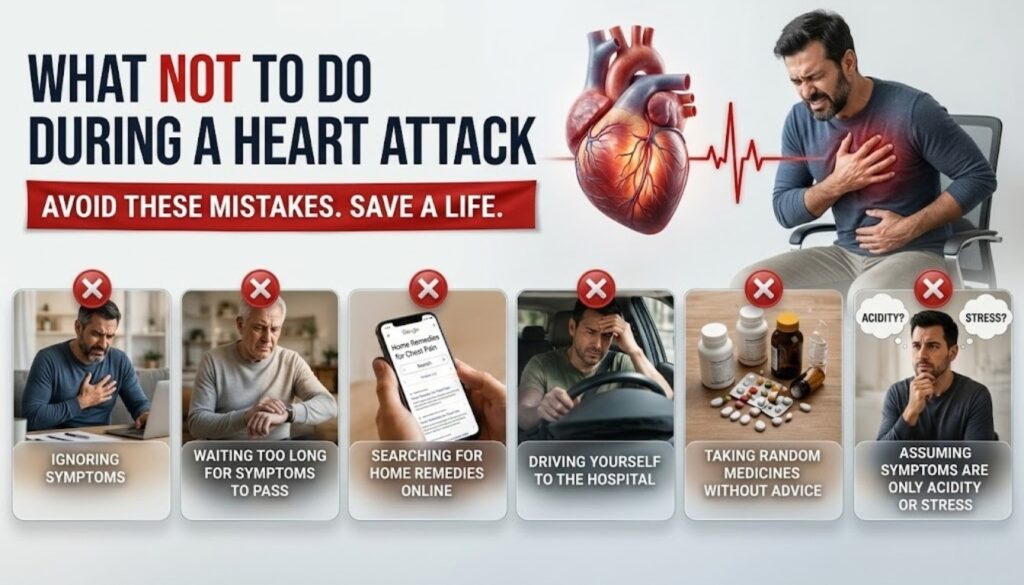
What NOT to Do During a Heart Attack
Avoid:
- Ignoring symptoms
- Waiting too long for symptoms to pass
- Searching for home remedies online
- Driving yourself to the hospital
- Taking random medicines without advice
- Assuming symptoms are only acidity or stress
Quick medical treatment can save lives and reduce heart damage.
Heart Attack Treatment at CMCH Hospital Chomu
CMCH Hospital Chomu provides:
- 24/7 emergency cardiac care
- ECG and heart monitoring
- Emergency evaluation
- Cardiology consultation
- Ambulance support
- Preventive heart screening
Patients across Chomu, Jaipur, Govindgarh, and nearby areas trust CMCH for rapid emergency response and advanced cardiac support.
Emergency Contact: +918690055515
Why Immediate Treatment Matters
During a heart attack, every minute matters.
Delaying treatment can:
- Increase heart muscle damage
- Reduce recovery chances
- Increase risk of cardiac arrest
- Lead to life-threatening complications
Early emergency care improves survival and long-term recovery.
Conclusion
There is no guaranteed way to “stop a heart attack in 30 seconds” at home. Viral internet advice such as cough CPR myths can delay life-saving treatment and increase risk.
What actually helps is:
- Calling emergency services immediately
- Staying calm
- Sitting down
- Seeking urgent professional treatment
- Following proper cardiac emergency first aid steps
Understanding the correct emergency response can improve survival and reduce complications during heart emergencies.
CMCH Hospital Chomu provides 24/7 emergency cardiac support for patients across Jaipur and nearby areas.
FAQs
Can coughing stop a heart attack?
No. The cough CPR myth is widely misunderstood and should not replace emergency medical treatment.
What is the first thing to do during a heart attack?
Call emergency medical services immediately and avoid physical exertion.
Should I chew aspirin during a heart attack?
Only if medically appropriate or recommended by a doctor or emergency professional.
Can young adults get heart attacks?
Yes. Smoking, obesity, diabetes, stress, and family history can increase risk even in younger individuals.
Should I drive myself to the hospital during chest pain?
No. It is safer to call emergency services or ambulance support.
Can heart attack symptoms start slowly?
Yes. Some heart attacks begin gradually with mild chest discomfort, fatigue, or breathlessness before becoming severe.
Related Blogs
- Heart Attack Symptoms Guide
- Early Signs of a Heart Attack
- Chest Pain from Gas vs Heart Attack
- ECG Test in Chomu
- Heart Check-Up Packages in Jaipur & Chomu
Sources & References
- World Health Organization (WHO) – https://www.who.int
- American Heart Association – https://www.heart.org
- National Health Service (NHS) – https://www.nhs.uk
- Centers for Disease Control and Prevention (CDC) – https://www.cdc.gov
Disclaimer
This article is for informational purposes only and should not replace professional medical advice, diagnosis, or treatment. Consult qualified emergency medical professionals during suspected heart attacks.

0 Comments