Heart attacks are among the leading medical emergencies in India, and recognizing symptoms early can save lives. Many people ignore the initial warning signs, assuming the symptoms are caused by acidity, stress, fatigue, or indigestion. Delayed treatment can significantly increase the risk of severe complications and long-term heart damage.
Understanding heart attack symptoms and responding quickly during the first few minutes is critical for improving survival and recovery.
At CMCH Hospital Chomu, emergency cardiac care and cardiology services are available for patients across Chomu, Jaipur, Govindgarh, Reengus, and nearby areas.
What Are the Classic Symptoms of a Heart Attack?
The most common signs of heart attack involve chest discomfort and reduced blood flow to the heart. Symptoms may appear suddenly or develop gradually.
Common Heart Attack Symptoms
- Chest pain or pressure
- Tightness in the chest
- Pain spreading to the left arm
- Shortness of breath
- Sweating or cold sweat
- Dizziness
- Nausea or vomiting
- Weakness or fatigue
Chest pain is often described as:
- Heavy pressure
- Squeezing sensation
- Burning discomfort
- Tightness in the center of the chest
Some people experience symptoms continuously, while others may notice symptoms that come and go.
Less Obvious Heart Attack Warning Signs
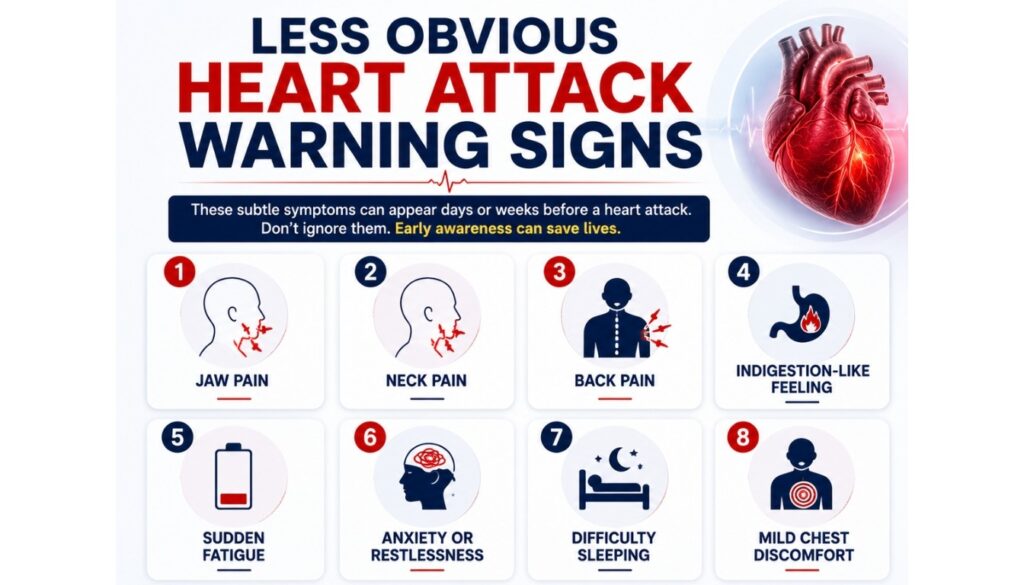
Not every heart attack begins with severe chest pain. Some people experience subtle symptoms that are often mistaken for digestive problems, stress, or tiredness.
These include:
- Jaw pain
- Neck pain
- Back pain
- Indigestion-like feeling
- Sudden fatigue
- Anxiety or restlessness
- Difficulty sleeping
- Mild chest discomfort
These early heart attack symptoms may appear days or weeks before a major cardiac event.
Read Also: 8 Early Signs of a Heart Attack You Should Never Ignore
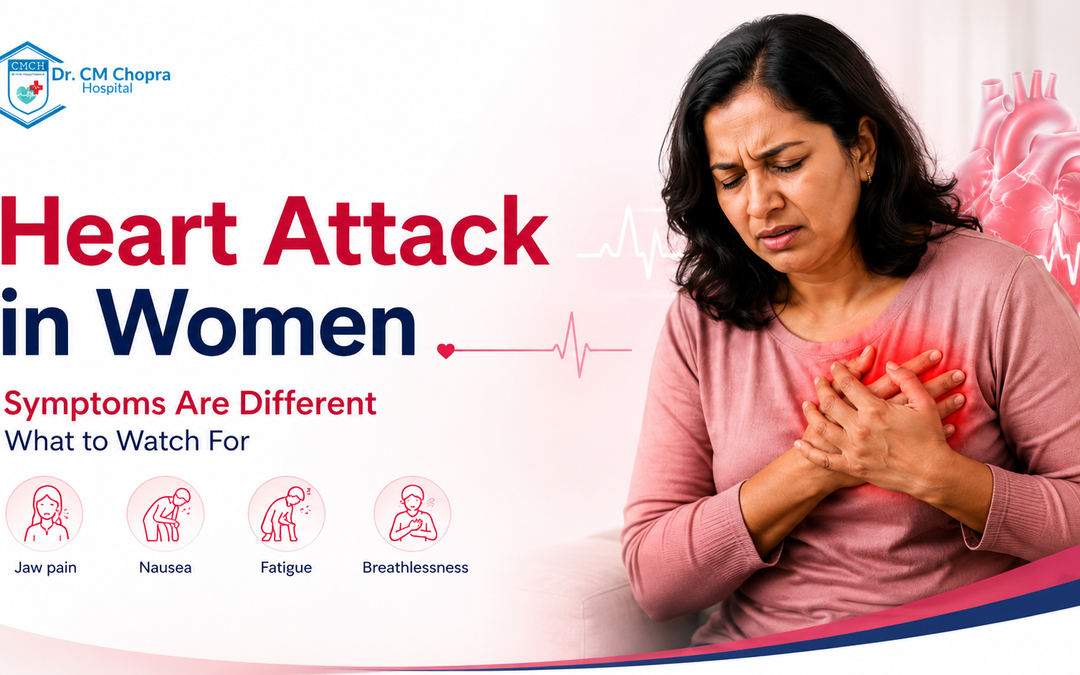
Heart Attack Symptoms in Women — Why They’re Different
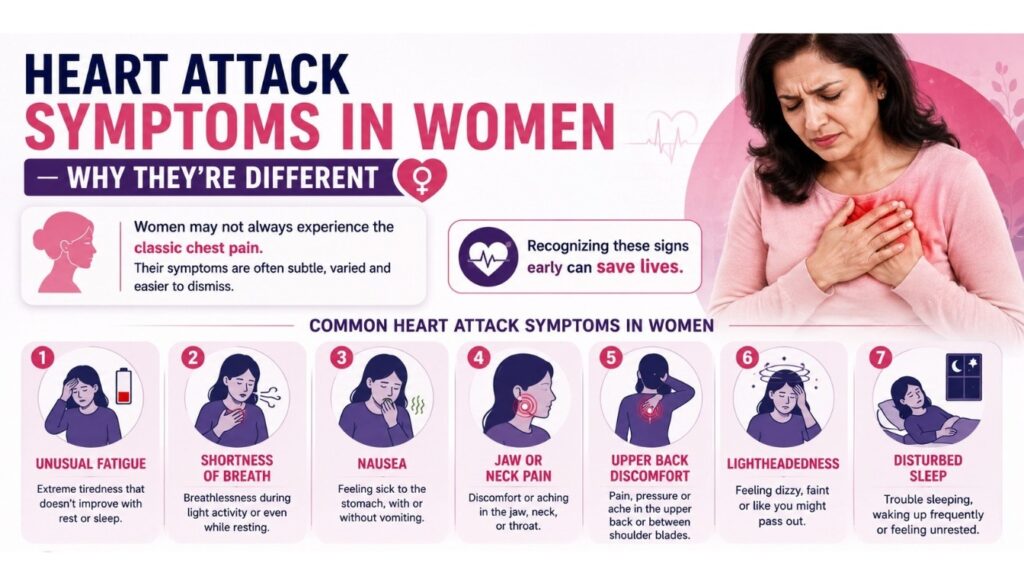
Heart Attack Symptoms in Women
Women often experience symptoms differently from men. In many cases, symptoms are less dramatic and more difficult to recognize.
Common heart attack symptoms in women include:
- Unusual fatigue
- Shortness of breath
- Nausea
- Jaw or neck pain
- Upper back discomfort
- Lightheadedness
- Disturbed sleep
Women may not always experience severe chest pain, which is why symptoms are frequently dismissed or misunderstood.
This delay in seeking treatment increases the risk of complications.
Heart Attack Symptoms in Men
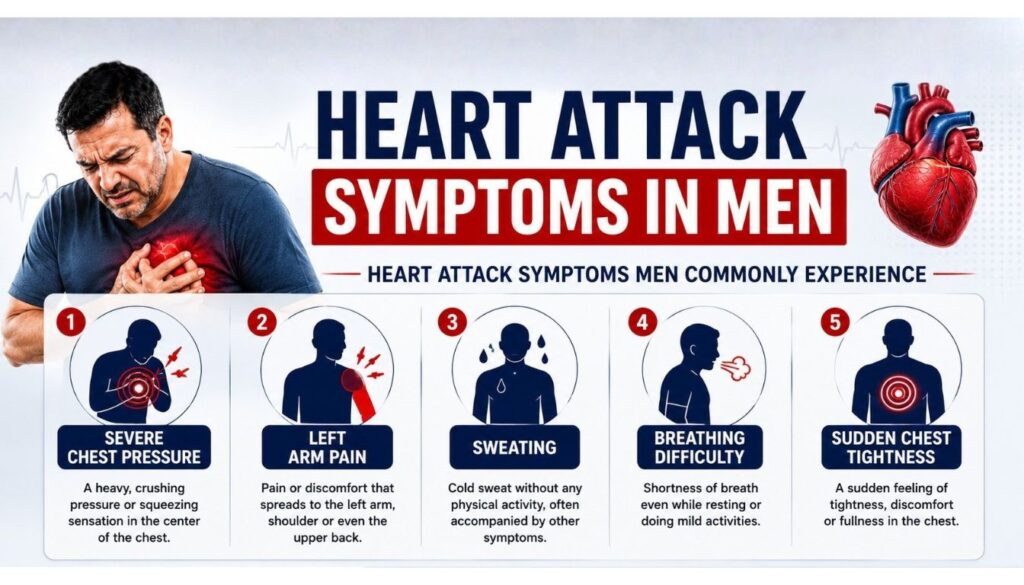
Heart Attack Symptoms Men Commonly Experience
Men are more likely to experience classic symptoms such as:
- Severe chest pressure
- Left arm pain
- Sweating
- Breathing difficulty
- Sudden chest tightness
Symptoms in men are often more intense and easier to identify as heart-related.
However, silent or mild symptoms can still occur.
Early Warning Signs Days Before a Heart Attack
Many individuals experience heart attack warning signs days or even weeks before an actual heart attack occurs.
Common silent heart attack symptoms and warning signs include:
- Persistent fatigue
- Disturbed sleep
- Mild chest discomfort
- Breathlessness
- Indigestion-like sensation
- Anxiety or unexplained restlessness
Recognizing these symptoms early and consulting a cardiologist can help prevent severe cardiac emergencies.
What to Do in the First 10 Minutes of a Heart Attack
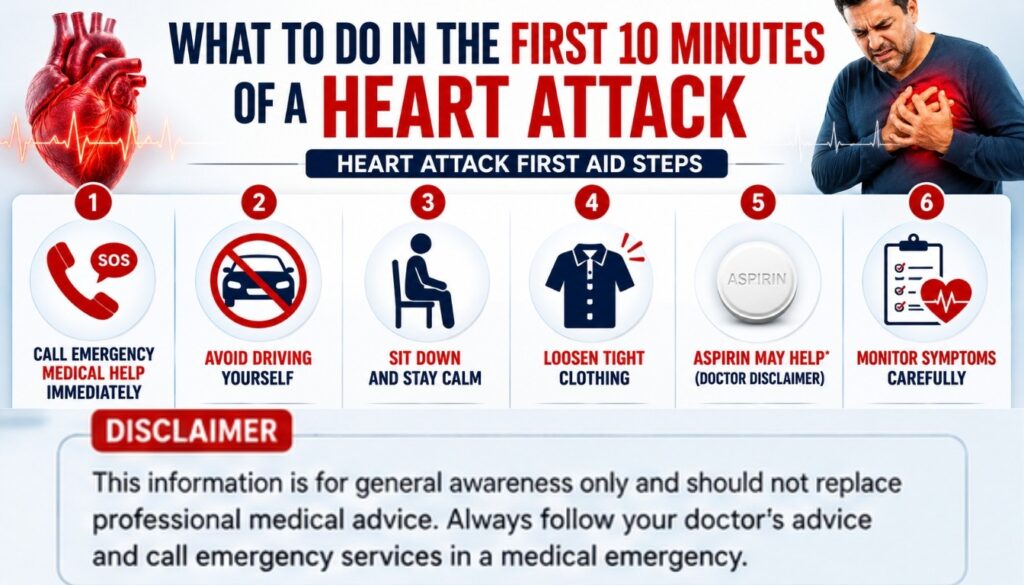
The first few minutes are critical during a heart attack.
Heart Attack First Aid Steps
1. Call Emergency Medical Help Immediately
Do not ignore symptoms or wait for them to disappear.
2. Avoid Driving Yourself
Always call an ambulance or seek emergency transport. Driving during a heart attack can be dangerous.
3. Sit Down and Stay Calm
Reduce physical movement and avoid panic.
4. Loosen Tight Clothing
This helps improve breathing and comfort.
5. Aspirin May Help (Doctor Disclaimer)
In some cases, doctors may advise chewing aspirin to reduce blood clot formation. However, aspirin should only be taken if medically appropriate and not restricted because of allergies, bleeding conditions, or existing medical advice.
6. Monitor Symptoms Carefully
If chest pain, sweating, or breathing difficulty increases, emergency treatment is required immediately.
Emergency Contact: +918690055515
Heart Attack vs Cardiac Arrest — Know the Difference
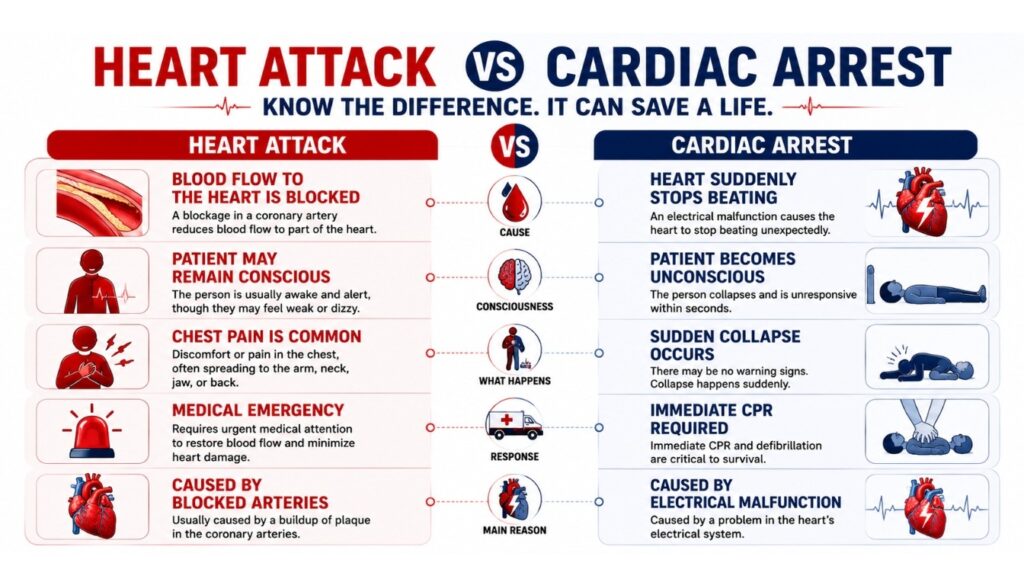
Many people confuse cardiac arrest vs heart attack, but these are different medical conditions.
| Heart Attack | Cardiac Arrest |
| Blood flow to the heart is blocked | Heart suddenly stops beating |
| Patient may remain conscious | Patient becomes unconscious |
| Chest pain is common | Sudden collapse occurs |
| Medical emergency | Immediate CPR required |
| Caused by blocked arteries | Caused by electrical malfunction |
A heart attack can sometimes lead to cardiac arrest if treatment is delayed.
When to Go to the Emergency Room
Seek emergency medical care immediately if you experience:
- Persistent chest pain
- Pain spreading to the arm or jaw
- Sudden sweating
- Difficulty breathing
- Severe dizziness
- Fainting
- Sudden weakness
Ignoring symptoms can increase heart damage and the risk of severe complications.
Heart Attack Treatment at CMCH Hospital Chomu
CMCH Hospital Chomu provides:
- Emergency cardiac care
- Cardiology OPD consultations
- ECG and Echo testing
- Heart screening packages
- Ambulance support
- Preventive cardiac evaluations
Patients from Chomu, Jaipur, Govindgarh, Reengus, and nearby regions trust CMCH for timely cardiac diagnosis and emergency support.
Diagnostic services such as ECG testing in Chomu help doctors quickly assess myocardial infarction symptoms and cardiac abnormalities.
Why Early Heart Screening Matters
Regular heart screening helps:
- Detect hidden cardiac risks
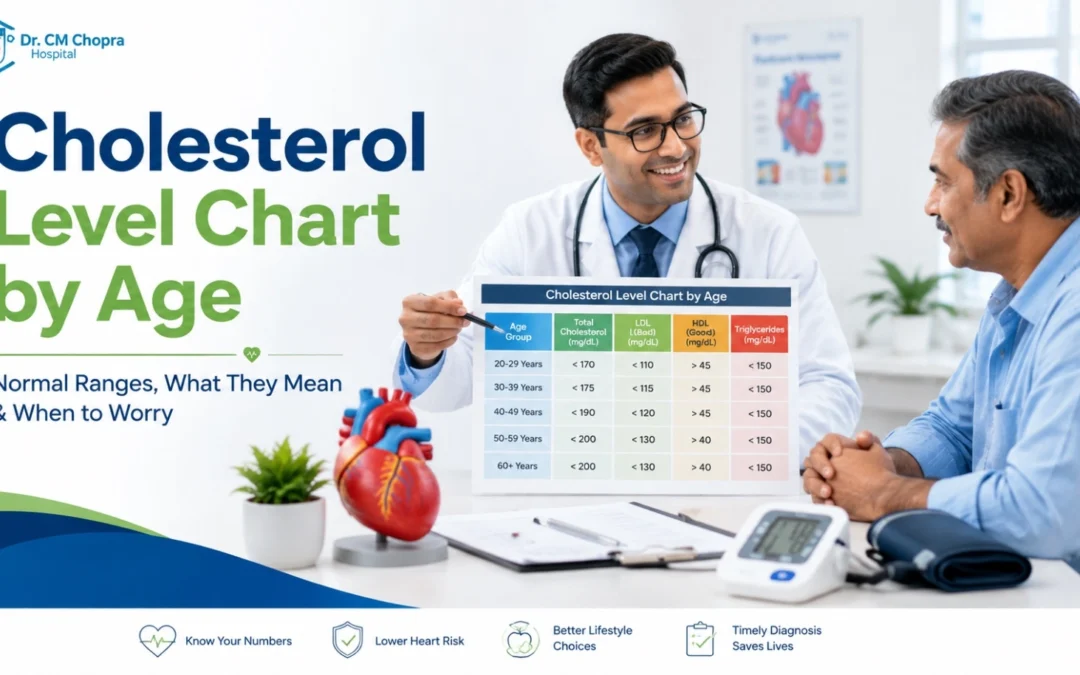
- Monitor BP and cholesterol
- Identify blocked artery risk
- Reduce emergency complications
- Improve long-term heart health
Preventive cardiac care is especially important for:
- Diabetes patients
- Smokers
- Individuals above 40 years
- High BP patients
- People with family history of heart disease
Related Reads
8 Early Signs of a Heart Attack You Should Never Ignore
Heart Check-Up Cost in Jaipur & Chomu: Packages, What’s Included & Why It Matters
ECG Test in Chomu: Cost, Procedure & What to Expect
Conclusion
Recognizing heart attack symptoms early can save lives and reduce severe cardiac complications. Symptoms such as chest pain, arm pain, sweating, shortness of breath, jaw discomfort, fatigue, and nausea should never be ignored.
Understanding the difference between heart attack warning signs, silent heart attack symptoms, and emergency symptoms helps individuals seek treatment at the right time.
CMCH Hospital Chomu provides emergency cardiac support, preventive screening, and advanced cardiology care for patients across Jaipur and nearby regions.
FAQs
What are the first symptoms of a heart attack?
The first symptoms may include chest pressure, arm pain, shortness of breath, sweating, fatigue, nausea, or dizziness.
Can a heart attack happen without chest pain?
Yes, some individuals — especially women and diabetes patients — may experience silent or less obvious symptoms such as fatigue, nausea, jaw pain, or shortness of breath.
What should I do immediately during a heart attack?
Call emergency medical help immediately, avoid driving yourself, stay calm, and seek urgent cardiac treatment.
What is the difference between cardiac arrest and heart attack?
A heart attack occurs when blood flow to the heart is blocked, while cardiac arrest happens when the heart suddenly stops beating.
When should I go to the emergency room for chest pain?
You should seek emergency medical care if chest pain is severe, persistent, spreads to the arm or jaw, or is associated with breathing difficulty or sweating.
Disclaimer
This article is for informational purposes only and should not replace professional medical advice, diagnosis, or treatment. Consult a qualified cardiologist for proper medical evaluation.

0 Comments