Most heart attack articles list symptoms. This one is about something more specific: what it actually feels like in the first few minutes when a heart attack is beginning — and how to tell that moment apart from something less urgent, before it’s too late to act.
Understanding heart attack early signs and symptoms can help you recognise when an ordinary discomfort has become a cardiac emergency.
Some heart attacks arrive with sudden, unmistakable chest pressure. Others start quietly — a wave of acidity, heaviness, breathlessness, sweating, nausea, or pain spreading into the arm, back, neck, or jaw. Symptoms can build gradually, come and go, or feel mild at first, which is exactly why they get ignored.
For a broader overview of symptoms, see Heart Attack Symptoms: The Complete Guide. For the warning signs that can appear before an emergency even begins, read 8 Early Signs of a Heart Attack You Should Never Ignore. This article sits between the two — it’s about the moment the line gets crossed.
What Happens in Your Body When a Heart Attack Begins?
A heart attack medically, an acute myocardial infarction begins when blood flow through a coronary artery becomes severely reduced or blocked, usually by a clot forming over a ruptured plaque. From that instant, part of the heart muscle is receiving less oxygen than it needs, and it starts to suffer.
In the first few minutes, the body may respond with:
- Pressure, squeezing, or heaviness in the chest
- A burning or indigestion-like sensation
- Pain spreading to the arm, shoulder, jaw, neck, or back
- Shortness of breath
- Cold sweating
- Nausea
- Sudden weakness or lightheadedness
- An unmistakable sense that something is seriously wrong
Chest discomfort is the most common symptom, but a heart attack doesn’t always begin with dramatic, crushing pain — it can start slowly and mildly.
Stable angina vs. a heart attack beginning
This distinction is the crux of the whole article. Stable angina follows a familiar pattern — it shows up during exertion or stress and usually eases within a few minutes of rest or prescribed medication. A heart attack can feel similar at first, but the discomfort tends to be stronger, last longer, appear at rest, keep returning, or simply fail to ease the way it normally would. NHLBI’s guidance is blunt on this point: treat uncertain chest pain as an emergency, because symptoms alone can’t safely rule a heart attack out.
If something feels new, more intense, or isn’t settling the way it usually does — that’s the signal. Don’t wait to see what happens next.
Prodromal Symptoms Signs in the Days Before
Not every heart attack strikes without warning. Some people notice prodromal symptoms in the days or weeks beforehand — not specific enough on their own to diagnose anything, but worth taking seriously when they’re new or unexplained:
- Unusual fatigue
- Shortness of breath
- Disturbed sleep
- Mild or recurring chest discomfort
- Arm, shoulder, jaw, or back discomfort
- Nausea or indigestion-like symptoms
- Unexplained anxiety or restlessness
Research in women with acute myocardial infarction has reported fatigue, breathlessness, chest discomfort, and upper-body pain before the acute event. However, prodromal symptoms are not specific enough to predict a heart attack on their own
The useful question isn’t “am I tired?” It’s: is this new, unusual for me, unexplained, or happening alongside other cardiac symptoms? Treat a prodromal period as a reason to get checked, not as a reliable countdown clock.
Acute Signs The Moment It Starts
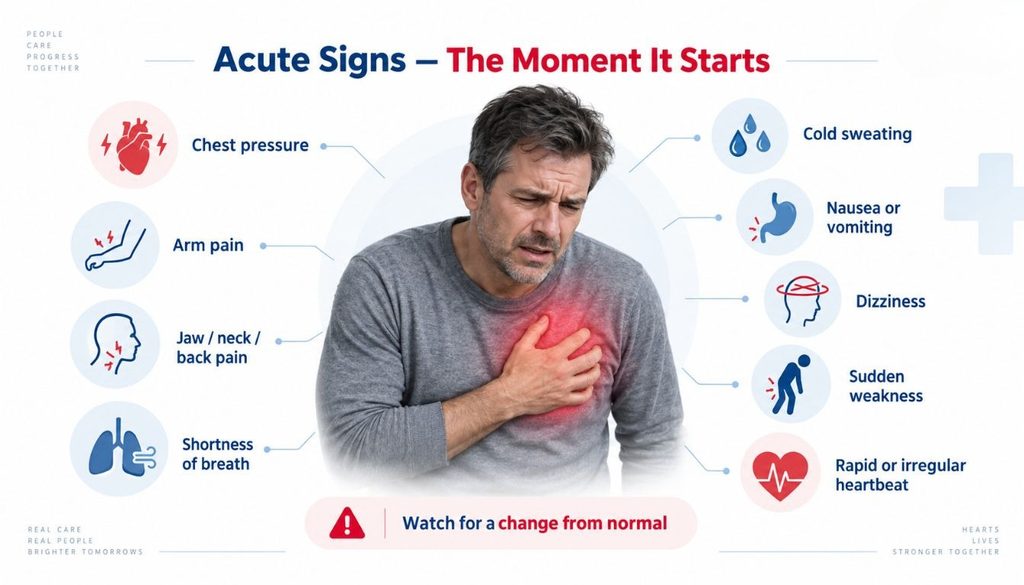
This is the moment the article exists to describe. The heart attack starting symptoms that matter most are the ones that appear suddenly or shift noticeably within minutes:
- Central chest pressure, squeezing, fullness, or pain
- Pain spreading into one or both arms
- Jaw, neck, shoulder, or back discomfort
- Shortness of breath, with or without chest discomfort
- Sudden cold sweating
- Nausea or vomiting
- Lightheadedness or dizziness
- Sudden, unusual weakness
- A rapid or irregular heartbeat
The American Heart Association notes some heart attacks are sudden and intense, while others build slowly from mild discomfort.
This is exactly why people lose the minutes that matter most, thinking: “Probably gas.” “I’ll sit for ten minutes.” “Maybe it’s stress.” “I’ll see if it gets worse.” You cannot judge how dangerous a coronary blockage is by how dramatic the pain feels in the moment — mild-feeling symptoms can sit on top of a fully blocked artery. The thing to watch for isn’t intensity; it’s a change from normal that doesn’t pass.
What Bystanders Should Watch For
A person having a heart attack doesn’t always recognise it themselves. As a bystander, watch for:
- Someone suddenly stopping an activity because of chest discomfort
- Sudden paleness, sweating, or unusual quietness
- Repeatedly rubbing or holding the chest, shoulder, or arm
- Laboured breathing
- Complaints of jaw, back, or arm pain
- A faint, weak, or confused appearance
- Saying they feel nauseated or “not right”
- Symptoms that ease briefly and then return
If the person becomes unresponsive and stops breathing normally, this may have progressed to cardiac arrest, which needs immediate CPR and an AED if one is available. Don’t argue with someone insisting “I’m fine” while they’re sweating, breathless, and clutching their chest — that reassurance is often the symptom talking, not the person.
The Golden Hour Why Minutes Matter
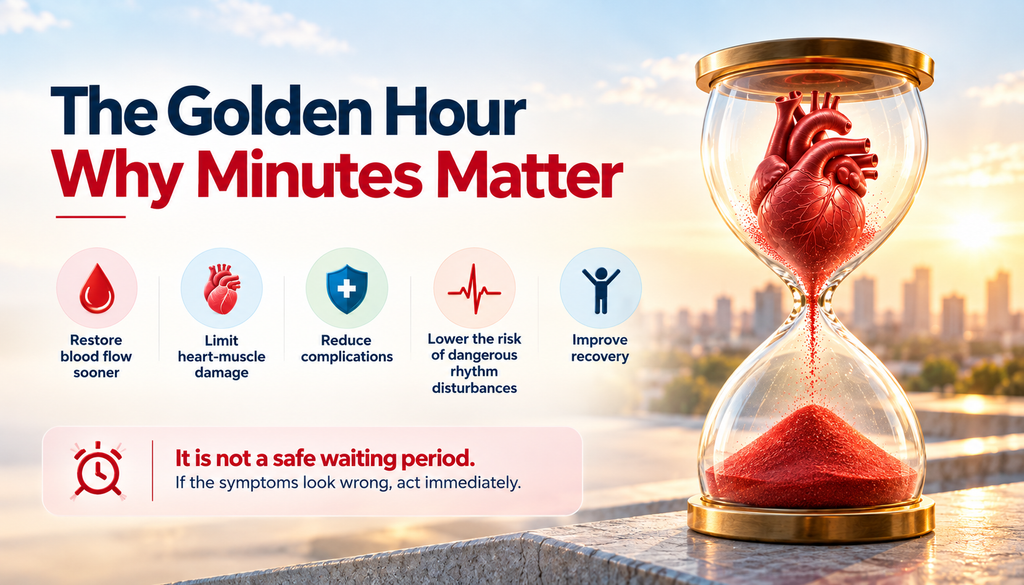
“Golden hour” gets used loosely, but it isn’t a safe waiting period there’s no point at which delay is fine just because symptoms have only just started. Once a coronary artery blocks, the heart muscle downstream starts suffering from inadequate oxygen, and the longer that blood flow stays cut off, the more of that damage becomes irreversible.
Acting early can:
- Restore blood flow sooner
- Limit heart-muscle damage
- Reduce complications
- Lower the risk of dangerous rhythm disturbances
- Improve recovery
The right response to early symptoms isn’t to wait for the pain to become unbearable. It’s to act the moment the pattern looks wrong.
Call CMCH Emergency Immediately
If you suspect a heart attack, do not drive yourself to the hospital. A patient’s condition can deteriorate suddenly mid-journey, and only an ambulance crew can monitor vitals, start treatment, and respond immediately if cardiac arrest develops en route. NHLBI specifically recommends an ambulance as the safest way to reach the hospital, since EMS can assess and begin treatment during transport.
For patients in Chomu, Jaipur Road, Govindgarh, Reengus, and nearby areas:
CMCH Hospital, Chomu — Direct Contact:
📞 +91 86900 55515
For suspected cardiac symptoms, call CMCH immediately or contact your local emergency medical service. CMCH Hospital lists 24×7 availability and has a Cath Lab, Cardiac Care Unit (CCU), and Intensive Care Unit (ICU). (CMCH)
If you suspect a heart attack:
- Call for emergency help immediately.
- Keep the person seated or resting.
- Do not let them drive.
- Follow the emergency team’s instructions.
- If they become unresponsive and aren’t breathing normally, begin CPR and use an AED if available.
Don’t delay the call to try home remedies or wait for symptoms to pass.
Frequently Asked Questions
What are the earliest signs that a heart attack is starting?
Chest pressure or discomfort, breathlessness, sweating, nausea, lightheadedness, and pain in the arm, jaw, back, or shoulder. Symptoms can begin mildly and build over time.
Can symptoms appear days before a heart attack?
Yes — unusual fatigue, breathlessness, disturbed sleep, or recurring discomfort are commonly reported beforehand, though they aren’t specific to heart attacks and should be checked when new or unexplained.
How can I tell stable angina from a heart attack?
Stable angina follows a familiar pattern and eases with rest or medication. Heart attack symptoms tend to last longer, feel different, occur at rest, or fail to improve. When unsure, treat it as an emergency.
Should I drive myself to hospital if I have chest pain?
No emergency medical transport is safer, since monitoring and treatment can begin before you even reach the hospital.
What number should I call for CMCH Hospital, Chomu?
+91 86900 55515, listed as CMCH’s official direct contact number, available 24×7. (CMCH)
Takeaway
The most important thing about recognising a heart attack early is catching the moment something changes. It can begin with severe, crushing chest pain or with mild pressure, breathlessness, nausea, sweating, or pain spreading through the upper body. Don’t wait for it to become dramatic. If something feels new, persistent, or wrong especially chest discomfort paired with sweating, breathlessness, nausea, or radiating pain call for emergency help immediately.
Medical Disclaimer
This article is for general health education only and does not replace professional medical consultation, diagnosis, or emergency treatment. If you suspect a heart attack, seek emergency medical help immediately.


0 Comments