Heart attacks often do not happen suddenly without warning. In many cases, the body starts showing subtle symptoms days or even weeks before a major cardiac event occurs. Unfortunately, these warning signs are commonly ignored or mistaken for stress, acidity, fatigue, or digestive problems.
Recognizing the signs of heart attack early can help people seek timely medical attention and reduce the risk of severe complications.
At CMCH Hospital Jaipur & Chomu, cardiology specialists regularly help patients identify early heart attack warning signs before they become life-threatening emergencies.
What Are the Early Signs of a Heart Attack?
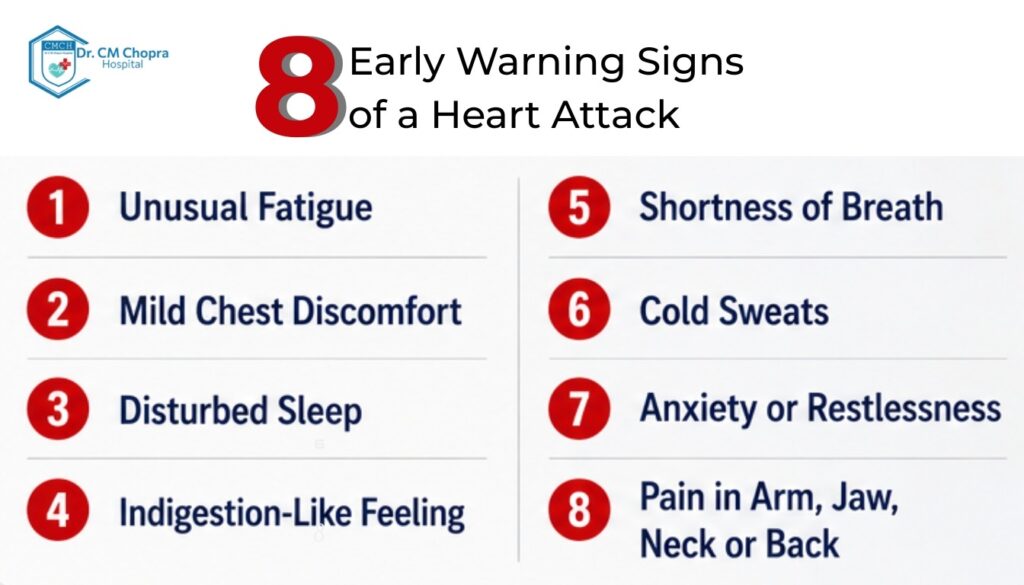
Early signs of a heart attack may include unusual fatigue, mild chest discomfort, disturbed sleep, indigestion-like feelings, shortness of breath, anxiety, cold sweats, and pain in the arm, jaw, neck, or back. These symptoms can appear days or even weeks before a major cardiac event.
Why Early Heart Attack Signs Are So Often Missed
Most people associate heart attacks with sudden severe chest pain. However, pre heart attack symptoms are often mild, gradual, and easy to dismiss.
People commonly ignore these symptoms because they:
- Assume it is acidity or indigestion
- Blame stress or lack of sleep
- Ignore unusual tiredness
- Think symptoms are temporary
- Delay seeing a cardiologist
In many cases, these symptoms appear several days before an active heart attack occurs.
8 Early Warning Signs of a Heart Attack
1. Unusual Fatigue
Feeling constantly tired without heavy physical activity can be an early sign of reduced heart efficiency. Many individuals feel exhausted even after proper rest.
This symptom is more commonly reported in women and older adults.
2. Mild Chest Discomfort
Unlike an active heart attack, early symptoms may involve:
- Mild chest pressure
- Tightness
- Burning sensation
- Intermittent discomfort
The pain may come and go over several days.
3. Disturbed Sleep
Difficulty sleeping, frequent waking, or unexplained restlessness at night can sometimes indicate underlying heart stress.
Many patients experiencing heart attack symptoms days before report poor sleep quality before a cardiac event.
4. Indigestion-Like Feeling
A developing heart problem can sometimes feel like:
- Acidity
- Gas
- Upper abdominal discomfort
- Burning sensation after meals
Because these symptoms resemble digestive problems, they are frequently ignored.
5. Shortness of Breath
Breathlessness during simple activities such as walking or climbing stairs may indicate reduced heart function.
This symptom may appear even without chest pain.
6. Cold Sweats
Unexpected sweating without physical exertion or heat exposure may be linked to poor blood circulation and heart stress.
Cold sweats combined with chest discomfort should never be ignored.
7. Anxiety or Restlessness
Some individuals experience unusual anxiety, nervousness, or unexplained restlessness before a cardiac event.
These symptoms may occur along with fatigue or breathing discomfort.
8. Pain in the Arm, Jaw, Neck, or Back
Heart-related discomfort does not always remain in the chest. Pain may spread to:
- Left arm
- Jaw
- Neck
- Shoulder
- Upper back
This is one of the most ignored warning signs before heart attack.
How Early Signs Differ From an Active Heart Attack
Understanding the difference between heart attack prodromal symptoms and an active heart attack is important.
| Early Warning Signs | Active Heart Attack |
| Mild and gradual | Sudden and severe |
| Comes and goes | Persistent chest pain |
| Fatigue, sleep issues, indigestion | Severe chest pressure |
| Symptoms may last days or weeks | Medical emergency |
| Often ignored | Requires urgent treatment |
An active heart attack usually includes severe chest pain, breathing difficulty, dizziness, sweating, or collapse.
Who Is at Highest Risk?
Some individuals are more likely to experience early signs cardiac event symptoms, including:
- People above 40 years
- Diabetes patients
- High blood pressure patients
- Smokers
- Individuals with obesity
- High cholesterol patients
- Family history of heart disease
- Sedentary lifestyle
Regular cardiac screening is strongly recommended for high-risk individuals.
What to Do If You Notice These Signs
If you experience recurring or unusual symptoms:
- Do not ignore them
- Avoid self-diagnosis
- Monitor symptom frequency
- Reduce physical stress
- Consult a cardiologist immediately
Early diagnosis and preventive care can help reduce the risk of severe cardiac complications.
Regular heart check-up cost in Jaipur & Chomu packages help identify hidden cardiac risks before symptoms become severe.
When to Seek Emergency Medical Help
Seek immediate emergency care if you experience:
- Severe chest pain
- Difficulty breathing
- Heavy sweating with chest pressure
- Pain spreading to the arm or jaw
- Fainting or collapse
These may indicate an active heart attack requiring urgent treatment.
See a Cardiologist at CMCH Before It Becomes an Emergency
CMCH Hospital Jaipur & Chomu provides:
- Cardiology OPD consultations
- ECG and Echo testing
- Heart screening packages
- Preventive cardiac evaluation
- Emergency cardiac support
Our specialists help identify heart attack prevention signs and guide patients toward timely treatment and lifestyle changes.
Why Early Heart Screening Matters
Regular heart screening helps:
- Detect hidden heart conditions
- Monitor BP and cholesterol
- Reduce long-term complications
- Improve treatment outcomes
- Support preventive healthcare
Early diagnosis significantly improves the chances of preventing major cardiac emergencies.
Read our complete guide on:
Heart Check-Up Cost in Jaipur & Chomu: Packages, What’s Included & Why It Matters
Conclusion
Heart attacks often begin with subtle symptoms that people ignore. Recognizing the signs of heart attack early such as unusual fatigue, disturbed sleep, chest discomfort, indigestion-like feelings, and shortness of breath can make a life-saving difference.
Understanding these early heart attack warning signs and consulting a cardiologist at the right time may help prevent emergencies and improve long-term heart health.
CMCH Hospital Jaipur & Chomu provides advanced cardiac screening, diagnostic testing, and preventive heart care for patients across Jaipur, Chomu, Govindgarh, and nearby areas.
Disclaimer: This article is for informational purposes only and should not replace professional medical advice. Consult a qualified cardiologist for diagnosis and treatment.
FAQs
What are the early signs of a heart attack?
Early signs may include unusual fatigue, chest discomfort, disturbed sleep, indigestion-like symptoms, shortness of breath, anxiety, and cold sweats. These symptoms can appear days or weeks before a major cardiac event.
Can heart attack symptoms appear days before?
Yes, many people experience symptoms such as fatigue, mild chest pressure, disturbed sleep, or breathing discomfort several days before a heart attack occurs.
Are acidity and indigestion signs of a heart problem?
Sometimes heart-related discomfort may feel similar to acidity or indigestion, especially during the early stages of a cardiac issue.
When should I see a cardiologist?
You should consult a cardiologist if symptoms are recurring, unusual, or associated with fatigue, chest discomfort, or breathing problems.
Who is at high risk of heart attack?
People with diabetes, BP, obesity, smoking habits, high cholesterol, or family history of heart disease are at higher risk.

0 Comments